 shopping
process early
20th century weights
and
measures old bakers
shops old butchers
shops old
fishmongers old grocers
shops old
Co-op shops old
dairies old
greengrocer
shops old sweet
shops

Measurements of weight, volume and length before Britain went decimal
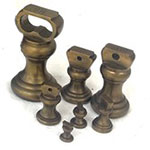
What it was like to use the old system of weights and measures before Britain went decimal, written from personal experience of the webmaster with additional research. The system was known as the Imperial System.
The need for an agreed system of weight, volume and length
For markets to work, there needs to be a common standard for how weight, volume and length are measured. Before 1965, shops used a set of standards introduced in law in 1824 defining pounds for weight, pints for volume and feet or yards for length. Subdivisions were given their own names. In even earlier times, there was little or no standardisation with different areas of the country using their own definitions. This page introduces the old weights and measures, showing how unwieldy they were.
In 1965 the British government redefined the age-old Imperial System of measurement, replacing pounds with kilograms, pints with litres and feet with metres. This had - and still has - the advantage of tying in with many countries throughout the world and making calculations easier.
Strange imperial units in past times
In the past there were some quite strange definitions for some units. The 'inch', for example, was at one time defined as the length of 3 barley seeds placed end to end. Also, and more practically, it was defined as the width of a man's thumb. Hardly accurate!
In the times covered by this website, the Imperial System of units were defined by the Weights and Measures Act of 1824, which gave the basic unit of length as the yard. This was defined as the distance between two marks on a bronze bar stored in the House of Commons. Unfortunatly the House of Commons burnt down a few years later in 1834 and so a good copy of the original bronze bar became the new standard.
Other units of length in use before decimalisation include: the thou, inch, hand, foot, yard, chain, furlong, mile and league. The yard is still used in certain circumstances alongside the metre.
How shops weighed and measured their goods in the early 1900s
At the time of my mother's childhood recollections of the early 1900s, relatively few goods came ready-packaged from manufacturers. Shopkeepers normally weighed or measured out their goods themselves.
Goods were sold by weight, volume, length, or per item, depending on what they were.
Foodstuffs were generally sold by weight in pounds (written as lbs) where 1 lb = 0.453592 kg, roughly half a kilogram.
Larger units were used for heavy items like coal (which was delivered to the door), and smaller units were used for lightweight items like the powders dispensed by chemists.
To speed up sales, the shopkeepers weighed out frequently-requested goods into bags while the shop was closed, using balance scales which worked by balancing the goods against known weights or on spring scales which worked by compressing a spring which moved a dial. There were a number of different types, suitable for various weights and types of goods - see the scales page.
Commonly used weights in the early 1900s:
16 drams = 1 ounce (oz)
16 ounces (oz) = 1 pound (lb)
14 pounds = 1
stone
(not abbreviated)
112 pounds = 1 hundredweight (cwt)
20 hundredweights = 1 ton
2240 pounds = 1 ton
This system of weights was known as the Imperial system.
Why so many queues
There were always, of course, customers who needed goods weighed out to order while they waited. Consequently, waiting around and queuing to be served was a normal part of shopping. No-one seemed to mind. The women - as it was invariably women who did the shopping - knew nothing else, and it gave them the opportunity to indulge in social chit-chat without feeling guilty that they ought to be at home doing housework.
Pricing goods of non-standard weight
There was a clever system which let shopkeepers appear to price goods instantly in their heads, but that was not yet available in the early 20th Century. When my mother was a child, women told the shopkeeper what weight of something they wanted and he would add or remove bits to get that weight.
| sources | webmaster | contact |
Text and images are copyright
If you can add anything to this page or provide a photo, please contact me.

