 potteries
as
industries the Cole
Pottery
Tottenham pottery
working
practices pottery
house
1910s-1950s Sid Cole
pottery
owner E.G.Cole
pottery
owner J.R.Cole
pottery
manager John Cole
pottery
founder Daniel Cole
potter,
seaman Cole
ancestry Pettit
Pottery,
Walthamstow Tile
kilns Arkley
pottery Bristol
potteries Cox-Reedman
Australian
brickworks JC Reedman
Australian
sportsman distant
USA
cousins early
brickworks,
north London

Sidney Brandon Cole (1893‑1957), Cole Pottery owner
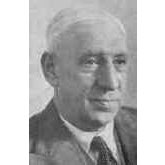
Sidney Brandon Cole was the owner of the Cole Pottery in Tottenham from 1920 until its closure in the 1950s. This page considers what he was like as a man, based on key events in his life and as reported by people who knew him. It is told by a Cole descendant from interviews, volunteered contributions and documentary research.
____
by the webmaster from family recollections and research
Sid Cole
Sidney Brandon Cole – or Sid Cole as he was generally known – inherited the Pottery at Tottenham on the death of his father, E.G.Cole. He was an enigmatic figure who seems to have generated extreme reactions in people.
Imagine a man borne to a wealthy family who grew up with every possible advantage, and was used to having what he wanted. Imagine him against the background of owning a flourishing business with numerous employees, all managed for him by a manager. If you can imagine such a man, you have a fairly precise picture of Sid Cole.
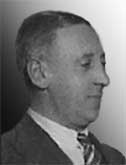
Sid Cole as a young man
Sid Cole's early life
Sid was born on 1 June 1893 at the Pottery House on the Cole Pottery site in Tottenham. That is one of the few pieces of precisely documented dated information that I have on his early life. Most of everything else was told to me some fifty years ago by older members of my mother's wider family - and I took copious notes. Although undated, I do not doubt their veracity as they were supported on various occasions by different family members.
Sid was educated at Trinity Grammar School, Tottenham - a fee-paying school. I have no record of whether he went on to university, at that time widely regarded as a finishing school for wealthy young men.
It is doubtful that he involved himself much in the pottery because his uncle, my great grandfather, was the live-in manager. My mother spent a great deal of time at the pottery in her childhood and she never mentioned Sid for anything other than passing through. Then, so she said, he always looked supercilious, and never spoke to her.
He seems to have had free time for doing what he wanted. He owned a motor cycle, which was still something fairly special at that time and he became involved in roller skating. At one time, he held the amateur roller skating championship of Great Britain and the one-mile Southern Counties championship at Earls Court, London. That information came from newspaper articles.
Little is known about his involvement in the 1914 war, but he was certainly involved in some way as a 1924 press cutting mentioned a war injury - which did not apparently affect his skating.
Sid Cole's adult life
To his credit, Sid became increasingly involved in the wider community, and there is no shortage of details and dates. What follows is a list of what I discovered from press cuttings, his obituary, interviews, written contributions, a visit to the Wood Green Council Offices and research in Bruce Castle Museum. Some dates were available in the sources; others are assumed from context.
Around 1912, Sid introduced roller skating to Alexandra Palace where he became honorary manager for 18 years. Honorary means without payment and implies the generosity and ability of giving skill and expertise unpaid.
Around 1920, he was elected a member of what was then the Urban District Council.
In January 1924, Councillor Cole, as he was then, met the rink professional 'Professor' C B Bright in a head to head race. Despite a war time knee wound, Sid beat the professional over one mile in a time of 3m 55s which either says a lot about his standard of speed skating - or that Bright held back.
In 1925, Sid was appointed chairman of the Council's Works Committee, an office which he held until 1937.
In 1927 he was elected Chairman of the Urban District Council.
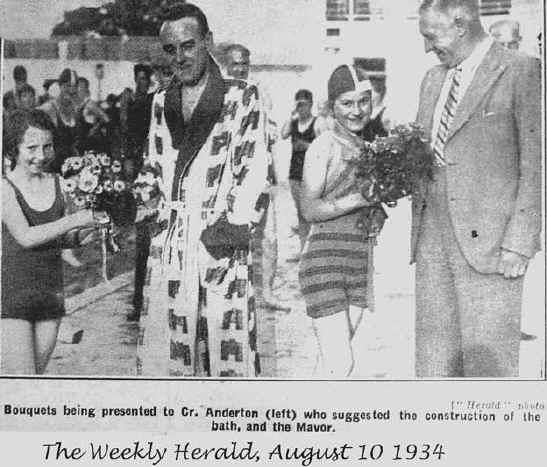
Sid Cole on his many public duties
In 1932, when the roller skating relay was held at Leicester, the entire Alexandra Palace team was unemployed. They were only able to compete because of the generosity of Alderman Cole who bought their rail tickets.
In 1933, Sid had the distinction of being the first mayor of the borough of Wood Green after the granting of its Charter of Incorporation. At the same time he was made an alderman.
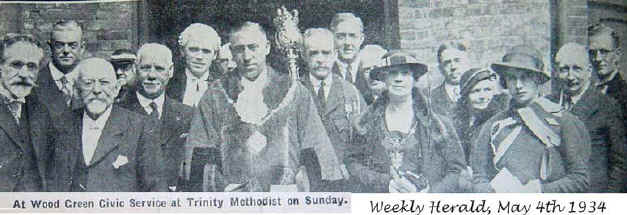
Sid Cole's inaugeration as mayor 1934
In 1935, he was made a Justice of the Peace.
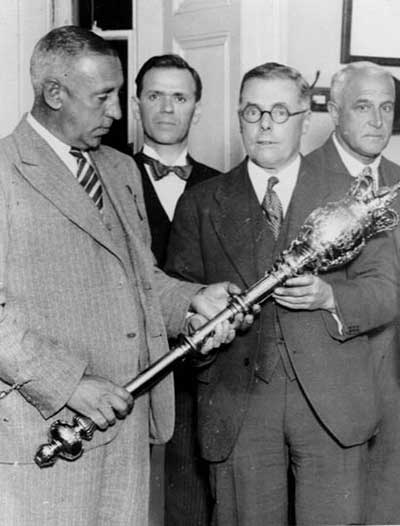
The following image, which is courtesy of Bruce Castle Museum, shows a press cutting of the original presentation of the mace by Sid Cole.
The following is a detail showing the inscription to his father, E G Cole:
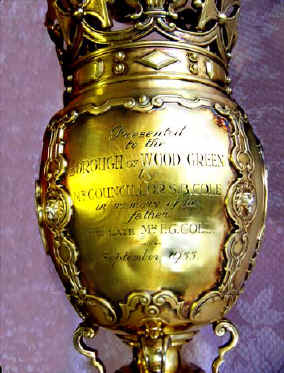
The inscription reads:
Presented
to the
BOROUGH OF WOOD GREEN
by
Mr Councillor S. B. COLE
in memory of his father
THE LATE MR E. G. COLE
September 1933
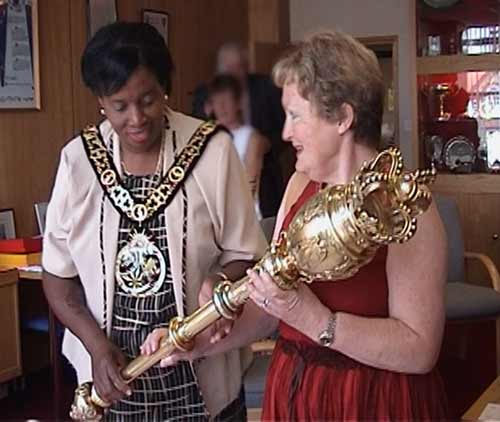
The then mayor of Wood Green, Councillor Erline Prescott, showing me the mace, c2000
In November 1937, the Town Clerk reported that Alderman S. B. Cole, J.P., had abruptly tendered his resignation from office. The letter intimated that he desired to devote more time to his pottery business, but there may have been more to it than that.
The letter was stated as received with regret. The Council wished to place on record their warm appreciation of the distinguished and valuable services rendered to the Borough by Alderman S. B. Cole, J.P., during his 17 years’ membership of the council and to express to him their heartiest thanks for all the time and unremitting attention he had so generously devoted to the affairs of the Council, particularly during his Mayoralty in 1933/4, and during his long and very able Chairmanship of the Public Works Committee.
Although Sid had retired in 1937, he was co-opted back into Council for the period of the Second World War (1939-45). After the war he was re-elected as alderman.
Around this time, he was particularly friendly with a man called Cawdron from a local factory and a man called Anderton who was a dentist. Do any of their descendants have anything to add to this page?
In 1954 he was appointed chairman of Alexandra Palace, having been associated with them from 1922 - 1955, and being Vice-Chairman of the Trustees from 1936 - 1942 and again from 1949 - 1953.
Also in 1954 he was made a Freeman of the Borough.
At some stage, date unknown, he was President of the Bowls Club.
Also at some stage, the grounds of the Wood Green Town Football Club were named 'Cole's Playing Fields' after him. This was the field opposite the pottery which had been owned by the pottery. I am not sure whether it was donated or leased.
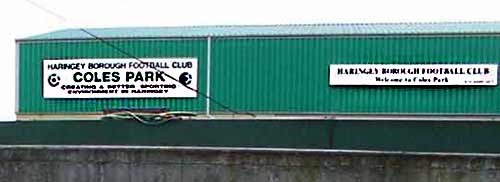
This field went by various names, but when Sid Cole gave or leased it for football, it was known as Cole's Park.
Sid Cole's wife, children and his Cole line
Sid's Cole line has died out.
He married a Jeanette or Jane or Janet, sometime between 1940 and 1943. At the time when I conducted the research, genealogy records were either not online or there at a cost, and I did not use them. Now of course I could, but it seems to me better to spend my time documenting what I have already from other sources. If anyone would like to fill in my gaps, and let me know, I would be very grateful.
There were two children from Sid's marriage:
-
Edward Sidney Brandon Cole
Edward Sidney Brandon Cole was known as Brandon.
He was born on 15 April 1923 and educated at Bedford School. He trained for the navy (D/JX 369 098) and spent 10 months at Plymouth alongside George Green who supplied this information and was a close friend. Then he was deployed to HMS Raleigh. He was drowned on 16 January 1944 in World War Two in a tank landing craft, and is listed on a war memorial on Plymouth Hoe.
Everything that follows about Brandon comes from George Green – in his nineties when he spoke to me.
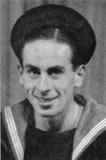
Brandon Cole, son of Sid Cole
When Sid heard of his son's death, he just said, "And he's got my watch" - very dismissive, it would seem. Yet he kept a photo of Brandon on his desk at the pottery afterwards. This was half of George's photo of himself with Brandon, with George cut off from it. Sid hadn't asked George for the photo directly, but got it via the assistants in a sweet shop that backed onto Pellat Grove.
It should be documented that everyone I spoke to about Brandon volunteered, that is told me without my asking, what a nice person he was.
-
Elisabeth Mary Brandon Cole
I know very little about her except what I learnt from George Green: that she married a John Blunt and that Sid wouldn't give her away at her wedding as he didn't approve of the marriage. In the event, Brandon did it.
Apparently there were no children from the marriage.
____
Although Sid's Cole line has died out, the Cole line from his father and grandfather is healthy. I descended from Sid's grandfather, John Cole via John's son James Reedman Cole and although various female marriages have prevented me from ever bearing the Cole surname, I have male Cole relatives who still carry it.
The other side to Sid Cole
Although the above section on Sid's adult life reads like a list of accolades, there was another side to his character. I never met him. I was 8 years old when he died but long before I was born, my mother's side of the Cole family had broken off all contact with him.
What follows comes from research into my mother's family history and talking to anyone and everyone who could supply me with information. This was a long time ago, but I took copious notes. These are necessarily disjointed because of how I came by them but they do shed light on Sid Cole's character.
- According to George Green, Brandon's friend, Brandon spoke of having no meaningful home life. Brandon hated his father and if he had lived he might well have murdered him. In support of the bad feeling that existed at home is George Green's information that Sid wouldn't give his daughter away at her wedding because he disapproved of her choice. So Brandon did it instead, although Sid tried to keep him working in the pottery claypit so that he would miss the wedding.
- Sid certainly alienated people because of his womanising. I have lost count of the number of people who have mentioned this. Even when I was a child, my mother, who was not inclined to talk of such things, used to speak of the room on the top floor of the pottery house where Sid would meet his fancy ladies. The culture of today may be to accept this as of little importance, but the culture of the time was distinctly different!
- Another source told me that if women were going anywhere near Sid Cole, they ought to make sure that they wore tin knickers (presumably so that Sid couldn't get in).
- In 1944 Sid was named as co-respondent in a divorce case at a time when divorces were social taboo. Sid and his wife Janet separated and he set up home with the secretary of the Alexandra Palace Skating Club, Dorothy Lamb.
- I spoke to someone who appreciated Sid's 'generosity' to his 'friends' in letting them have black market petrol from the Pottery during World War II. This was at a time when ordinary people were suffering severe shortages. They would certainly not have been so appreciative of his black market activities. Potteries were treated as special cases for petrol rationing because they had to deliver pots for growing food. Deliveries from all the wider London potteries were from stockpiles as production had to cease during the war because the lights from the kilns would signal positions to enemy bombers.
- Sid's death and will, see below, leave the antagonism in the family in no doubt.
I already mentioned that all contact between Sid and my side of the Cole family had broken off. Now is the place to elaborate. The information comes from the family notes of my uncle, E.G.Cole II. It concerns Sid's treatment of my great grandfather, James Reedman Cole - more of whom on his own page.
Apparently, James had given up his career to help Sid’s father, E.G.Cole, to build up the pottery by being its live-in manager, and it was in E.G.Cole's will that Sid should look after James and that his side of the pottery house should remain his home until such a time and he no longer wanted it. However, sometime in the 1930s Sid sacked James and turned him out of the pottery house, saying that it was needed for employees flats, and that James was no different to any other employee. By that time James was frail and in his late 70s, and it was probably time for him to retire anyway, but to be turned out of his home was another matter.
James' eldest daughter, Edith, who had legal knowledge and was at one time a Justice of the Peace, wanted to take the matter to court, but James wouldn't let her because he didn't want trouble in families.
The death of Sid Cole
Sid died on Christmas Day 1957 shortly after having sold the pottery. He was 64 years old and a wealthy man.
According to a short newspaper cutting, the funeral on 31 December was a private one. My interpretation is that probably no-one attended with the possible exception of his wife, his daughter, and his new partner, Dorothy Lamb.
He was buried with his parents in their plot (Private grave 5400A, area 2), which I only know because I was searching the records of Tottenham Cemetery for my great grandparents, John and Mary Cole, and the two plots were bought side-by-side at the same time by their son, Sid's father, E.G.Cole.
As an indication of how his family felt about Sid, no-one either wanted or felt in a position to organise the inscription of a headstone in his memory.
The will of Sid Cole
I never saw Sid's will, as at the time of doing my research, the Probate Office had lost it - possibly because it had been removed for examination and not returned. However, I do know the following from the family notes of my uncle, E.G.Cole II.
The will was notable in three respects.
1. One was that it was out of date in that the majority of the estate was left to the Pottery which had, by then, closed.
2. The second was the obvious bitterness that he felt towards his wife. Janet was not mentioned by name, even though the names of the other beneficiaries were – which meant that she would have had the hassle of proving who she was before inheriting.
3. The third was that Dorothy was treated better than Janet. With regard to property, Dorothy was left the house and contents in Winchmore Hill where she and Sid had lived, whereas Janet was allowed to have the use of what had been the family house in Pellatt Grove which had to revert to the estate when she left. Dorothy had an annuity of £200 for life whereas Janet had one of £208 paid at £4 per week provided she did not remarry. In 1960, the annuity was increased to £800 by the High Court of Justice on the basis that the original was not enough to make reasonable provision for the Plaintiff.
I would love to know who the other beneficiaries were. Do you know?
| sources | webmaster | contact |
Text and images are copyright
If you can add anything to this page or provide a photo, please contact me.

