 potteries
as
industries the Cole
Pottery
Tottenham pottery
working
practices pottery
house
1910s-1950s Sid Cole
pottery
owner E.G.Cole
pottery
owner J.R.Cole
pottery
manager John Cole
pottery
founder Daniel Cole
potter,
seaman Cole
ancestry Pettit
Pottery,
Walthamstow Tile
kilns Arkley
pottery Bristol
potteries Cox-Reedman
Australian
brickworks J C Reedman,
Australian
sportsman Reedman ancestry Distant
cousins
in the USA Early English brickworks

The Cole Pottery in Tottenham: overview
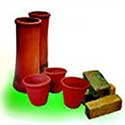
This page is a brief history and overview of the Cole Pottery in Tottenham, which is described in some detail on other pages. These showcase the work and way of life in the heyday of English potteries generally. Follow the links on the page and consult the top menu for more information.
____
by the webmaster from family recollections and research
The location of the Cole Pottery
You can find the location of the Cole Pottery by putting the postcode N22 5QL into an interactive map. Not that that will show the pottery itself which has long gone. It was in a rural setting and not particularly close to any town, which meant that it often went by several different addresses, depending on which of the nearest towns was in someone's mind at the time. It certainly was far too early to have a postcode. Today, the location is heavily built up and under the auspices of Wood Green Council. In its heyday, it gave its location as Tottenham which is how it marked its larger pots.
The pottery was also documented as the White Hart Lane Potteries, White Hart Lane being the road where the entrance was. White Hart Lane still exists today, but no longer a leafy lane where you can imagine a white deer prancing around.
The beginning of the Cole Pottery
In spite of persistent searches in various archives, I have found it impossible to locate precise dates for the beginning and end of trading. The pottery may have started in a small way as described in the page on early London brickworks.
Anecdotal evidence puts John Cole as the person who started the pottery. This does fit with my own research, as you can see by following his link. Almost certainly, though, the funding for the business must have been from his father, Daniel Cole who was in receipt of a large inheritance from his uncle Thomas Cole.
A placard on the pottery house puts its date as around 1805, but anecdotal evidence is that the house was there before the pottery. It was a large house, so there must have been a reason for a number of people to live there, but no reason or details have come to light.
The earliest documentary evidence on ownership of the pottery puts it firmly in the hands of John's son, E.G.Cole.
The interim years
In the hands of E.G.Cole and his son Sid Cole, the pottery flourished. Not only did the two men become wealthy; they also held prestigious positions in the community.
The page on industry explains why and how the pottery became such a major industry. The page on working practices describes the work while the owners' own pages say more on their recognition in the community.
The end of the Cole Pottery
Most sources give the closure of the Cole Pottery as in the late 1950s, but we can be more precise. According to David Marden who has described life in the pottery house when he lived there, his family left the pottery in 1970 and the pottery closed soon after.
In a press cutting, Sid Cole states that there was an inexhaustible supply of clay. So why did the pottery have to close? Another press cutting gives Sid Cole's reason as the introduction of purchase tax. This may have contributed, but there can be little doubt that competition from the new plastics industry played the major part. Plastic pots were lighter to work with and did not break the way that clay pots did at the slightest knock.
After closure, the pottery was left derelict for some time before it was demolished, and it became a playground for local children who loved to climb and play on the steps in the clay pit.
| sources | webmaster | contact |
Text and images are copyright
If you can add anything to this page or provide a photo, please contact me.

