Based on experiences in Edgware, north London in the 1940s
Hitler tried to starve Britain into submission in the Second World War. So
Food was in short supply because of the risk to merchant seamen of bringing
it in from overseas. These seamen risked their lives bringing in what they did,
in perpetual fear of being sunk by German submarines.
Consequently the Government and householders alike set up ways to produce
more food.
Increasing produce on the farms - land girls

Poster enhancing the lot of land girls and encouraging
more young women to volunteer - photographed in the Museum of Nottingham Life.
Because the young men went off into the armed services, young fit women,
known as land girls were drafted in to work on the land.
There was considerable propaganda about how wonderful land girls were. I
was even encouraged to tell people that I was going to be a land girl when I
grew up!
The posters always showed land girls as happy in their work, although I
doubt if that was the reality. It was hard, back-breaking work, and they did
us proud. (In fact all women had to go out to work to do the men's jobs
unless they had children too young for school, were over a certain age or
had other special circumstances.)

Growing fruit and vegetables in back gardens and preserving it

Poster encouraging everyone to grow as much of their
own produce as possible - photographed at Swansea Bay Museum.
The Government encouraged home owners to grow fruit and vegetables in their
back gardens. In fact, rationing was so severe that they needed little encouragement.
My mother's brother, on a twenty-four hour leave from the RAF dug up
our entire front garden and planted neat rows of cabbage plants which grew magnificently with the help of steaming
manure from the milkman's horse. (It was my job to rush out and scoop it up with a coal-shovel before any of the neighbours got there first!)
One morning, when my mother pulled back the
blackout curtains, the entire
crop had been 'lifted' during the night! Granny said she strongly
suspected that it was the work of one of the neighbours who was
believed to have had a vegetable stall in Woolwich Market. She
cursed the 'culprit' for years afterwards.
Michael Sullivan
So, like many other back gardens, our back garden was turned into a vegetable
patch. (We had always had two apple trees.)
I remember my parents' euphoria at the end of the war when we seeded a new
lawn.

Preserving fruit and vegetables
Fruit was preserved by 'bottling'. Bottling required special glass jars known
as Kilner Jars which had tightly fitting spring lids to stop leakage and to
keep out air. The seal was made even more secure with special rubber rings.
These rings had to be replaced every season, but the jars went on year after
year. To preserve the fruit, it was cooked and while still hot was poured to
overflowing into the Kilner jars which had been slowly heated in the oven. Then
the jars were sealed, and when cold, washed to removed any overflowing juice.

Fruit preserved by bottling in Kilner Jars - photographed
at Lincolnsfields Childrens Centre, Bushey.
Bottling worked well, although occasionally some mould did get in to spoil
the fruit.

Keeping rabbits for meat and chickens for eggs and meat
Rabbits as food in World War Two
Rabbits are very good at reproduction all the year
round. so those families that kept rabbits had a never ending supply of rabbit and chips, stewed rabbit
and rabbit pie. Rabbits were killed for eating whenever there were more
rabbits than cages.
To dispatch a rabbit, you suspended it by its back
legs with the left hand with its back towards you. Then with your open right
hand you struck it across the back of its neck with a swift chopping motion.
The rabbit was then disembowelled and a stick of wood was placed in the
cut to keep the cavity wide open. The following day the skin was removed.
The skin was worth money from the
rag and bone man
who sold it on for winter boots and clothing. First, though, it had to be
dried. My father stretched it tightly across a board, nailed it to the board
and rubbed in salt. When the skin was dry, it was as stiff as the board,
but was softened up by rubbing it together and pulling it over your knees.
(Mole skins could be dried in the same way. My first
mole trap cost 2/6 [half a crown]
from Woolworths but it soon paid for itself as we got
6d per skin. The skin was parcelled
up and posted to an address in the Exchange and Mart. Mole skins
were needed by plumbers for wiping lead joints, and were used for the purpose
ever since Roman times. Moles were bred on an industrial scale wherever
the Romans took their civilization. Nowadays pipes are copper and plastic
rather than lead.)
CHICKENS
Chickens were killed for food as soon as they stopped
laying eggs. We would all go and watch Dad wring a chicken's neck, and then we would
sit in a circle and pull out the feathers. It was an unpleasant activity
because the small feathers got up one's nose. The remaining ones went into
the compost bin. Chickens were cooked the same day that they were killed.
Peter Johnson
Additionally home owners were encouraged to keep rabbits and chickens for
food, but I, in my town environment of Edgware, never knew anyone who did.
In some ways, I find this surprising, as the excerpts in the boxes show that it was
an extremely worthwhile activity while so much shop food was
rationed.
However, everyone I have spoken to who kept chickens and rabbits had a
man at home at the time, either because he was too old to be in the forces
or because he was in what was called a 'reserved occupation'. I suppose
there must have been some exceptions, with women keeping chickens and
rabbits.
Most people where I lived had a section of their back
garden made into a chicken run, complete with nesting box, etc., so eggs
were plentiful. The chickens were fed on a mash made up at home - part bran
from the corn merchant
mixed with cabbage and left-overs, and all stewed. Preparing the mash was
a regular Saturday morning chore, making enough for the week, and it made
the house reek! My father had an incubator in the back bedroom, so we were
completely self sufficient, as we had a cockerel as well.
John Cole
Granny prided herself on being able to provide my mother, sister and me with many of the basic foods to augment the most severe of the rationing. She and my grandfather, kept half a dozen laying hens in the back garden, a few more were kept for the table. A wooden
'orange box', into which she placed frequently refilled old
stone hot water bottles, was the make-shift 'incubator' for hatching eggs. The survival rate of the resulting chicks was, as far as I recall, not impressive! She kept this contraption next to the hot-water
tank in the bathroom. In my memory, the smell lingers still!
Any eggs we didn't consume, she traded for a little extra sugar or tea, and during the frequent war-time
electricity cuts, we were one of the few families in the street with a candle or two to spare. She was a very resourceful woman! I know for a fact, that any rationed sugar, was kept for my sister and me.
Michael Sullivan

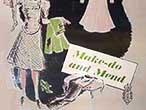
Being creative with a little food - Government recipes
I understand that the government published recipes showing what could be
achieved with the few basic ingredients, but I never saw any of them.

Food rationing and shortages: money matters
Married woman's allowance in World War Two
When a man went into the forces he was paid the regular
forces pay. If he was married, his wife would get a Married Women's Allowance
plus a small amount for each child. This was sent to her directly.
Peter Johnson
I never heard anyone talking about money
at the time, but I suspect that it was short during the war - not that there
was much to spend it on anyway, apart from having enough to eat.
During the war, women without young children and below the age of
retirement took the men's places, and women were never paid as much as men,
even for the same job.
My father's job was kept open for him during the war, and he went back
to it when he was demobilised - 'debobbed' as it was called. I assume
that forces pay in war-time was not as much as what most men earned in what
was called 'in civvy street'.

This website Join me in the 1900s is also known as
Join me in the 1900's and is © Pat Cryer.
The 1940s and 1950s are also written as the 1940's and 1950's.