author logo, Florence Cole
Florence Cole as a child

World War One: on the home front in working class London

Based on childhood recollections of a working class area in north London.

propaganda on the world war one home front

World War One propaganda photograph of a boy, showing him framed with the king's crown, the British flag, flags of the allies, fighter planes and a warship.

World War One propaganda photograph of a boy, showing him framed with the king's crown, the British flag, flags of the allies, fighter planes and a warship.

Everyone tried to help the World War One war effort in their own way. The photograph on the right shows an example of how street photographers did it.

My young brother had his photograph taken by a street photographer on the way home from school. What is interesting about it now is how the frame aimed to whip up pride in what Britain and its allies were doing fighting the war. Note the king's crown, the British flag, flags of the allies, fighter planes and a warship.

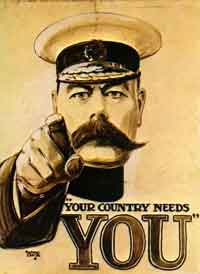
World War One propaganda poster to encourage women to let men fight

World War One propaganda poster, photographed in Royal Signals Museum.

Incidentally, my brother did not ask my mother's permission, and if he had done so she would doubtless have refused because money was so tight.


to top of page

The observation balloon station

There was an Observation Balloon Station in Hazelbury Road on the Huxley estate where I lived in Edmonton, north London. It was next to The Latymer School. We children never understood what the balloons were for. They seemed to be stationary in the sky with ropes attached to them and were not unlike the German Zeppelins, although of course much smaller. On the way back from Sunday School we would go and look at the soldiers stationed there, lining up for their Sunday dinner [lunch], each carrying a knife, fork and spoon.

to top of page

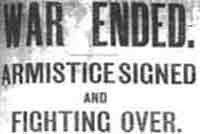
Peace, 1918

I was at school the day that peace was declared, and we children were sent home for a half day's holiday. Shortly afterwards people in our road, Lopen Road, began to organise a street peace party.

It was a time of celebration for some, but not for the families whose menfolk would not come home. As I write, I think of Harry Lauder, who was a well-known Scottish comedian. He started as a coal miner, but his gift of song and humour attracted attention, particularly in London, and around 1920 he was knighted. He too had a son who did not come home after WW1, and it was said that King George V admired him for the song he sang afterwards:

"Keep right on to the end of the road."

Harry Lauder was well-known, but ordinary people who were unknown suffered the same loss and knew the same heartache. My grandmother lost her son, Arthur Ewens, and my aunt lost her fiancee.

to top of page

This website Join me in the 1900s is a contribution to the social history of everyday life in early to mid 20th century Britain, seen through personal recollections and illustrations, with the emphasis on what it was like to live in those times. It is © Pat Cryer.

WORLD WAR ONE home front