 house price
SE England
late 1930s furniture
prices costs of
floor
covering price of a
radio/wireless
in 1938 costs of
house
maintenance cost of house
insurance
1938 household
accounts
1950s/60s inflation from
annual family
expenditure monthly
expenditure
1950s

Monthly expenditures for a British family, mid-20th century
This page uses a family account book from the 1950s and 60s to show how much a working-class English family with one child spent in various general areas. For explanations of these areas, see the page on household accounts.
____
By the webmaster based on her father's account book records, further research and contributions from others who lived at the time
My father's household account book for the years of 1953-1962 gives detailed records of how his working class family of a father, mother and one child spent their money each month in the middle years of the 20th century. It thus provides a unique window into the cost of living at the time and rates of inflation.
The earliest surviving full set are for 1953. There are also monthly accounts up to all the years until 1962, but being later they are probably of less interest.
Making sense of the accounts
The accounts are presented under key categories, as annual expenditure and as monthly expenditure (this page), and are of course in the old £-s-d (pound shilling and pence system). This page is about monthly expenditures.
My father was a trained accountant who must have kept his accounts in the accepted style. There were four columns for every month, except January, headed:
- Account brought forward
- Accrued
- Paid brought forward, and
- Paid
Although I can understand the general meaning of these headings I can't, as someone not trained in accountancy, really understand how the accounts worked. However, the first category of the mortgage repayments on our house (to 'Abbey Road') seem reasonably straightforward: My father seems to have been working towards balancing the books at the end of the year. So there was nothing to bring forward into January. The amount due in January was £4 and this was paid. By February that £4 had 'accrued', ie built up, into the yearly outgoings, but another £4 was due for the current month and was paid, making £8 the total paid for the year. This continued month by month so that the accrued outgoings by the end of December were 12 x £4, ie £48.
However, I leave it to better brains than mine to work out the significance of the amounts in the other categories. Yet I honestly believe that if they would do so, my father's accounts would provide a significant contribution to our understanding of the cost of living and the rate of inflation in the 1950s.
Monthly expenditures for 1953
The monthly accounts for 1953 are shown below as three images of four months each.
It would not be possible to provide such wide images in text form for a computer screen, let alone for a phone, so you will need to tap/click for larger, legible image versions.
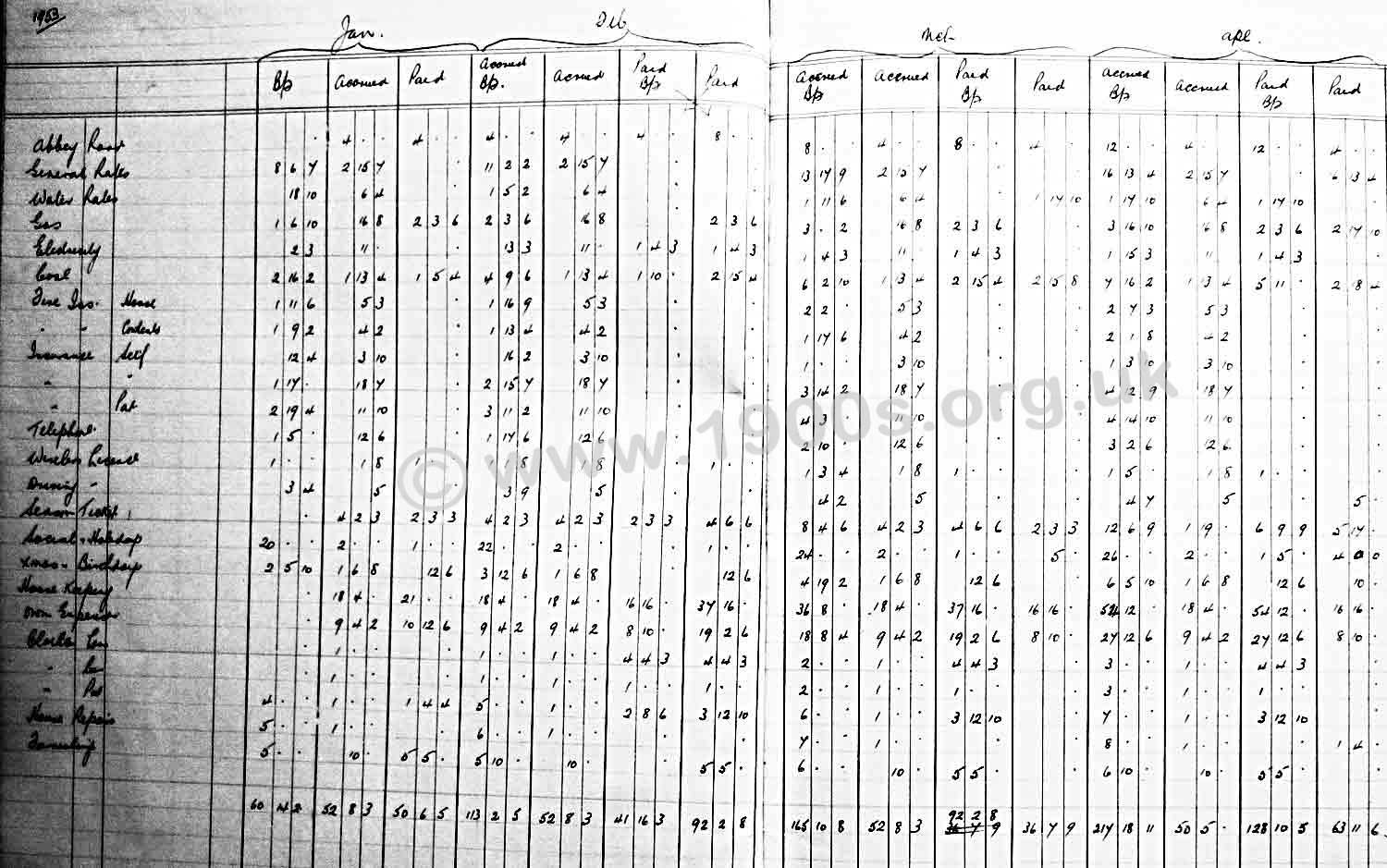
Expenditure January-April 1953 |
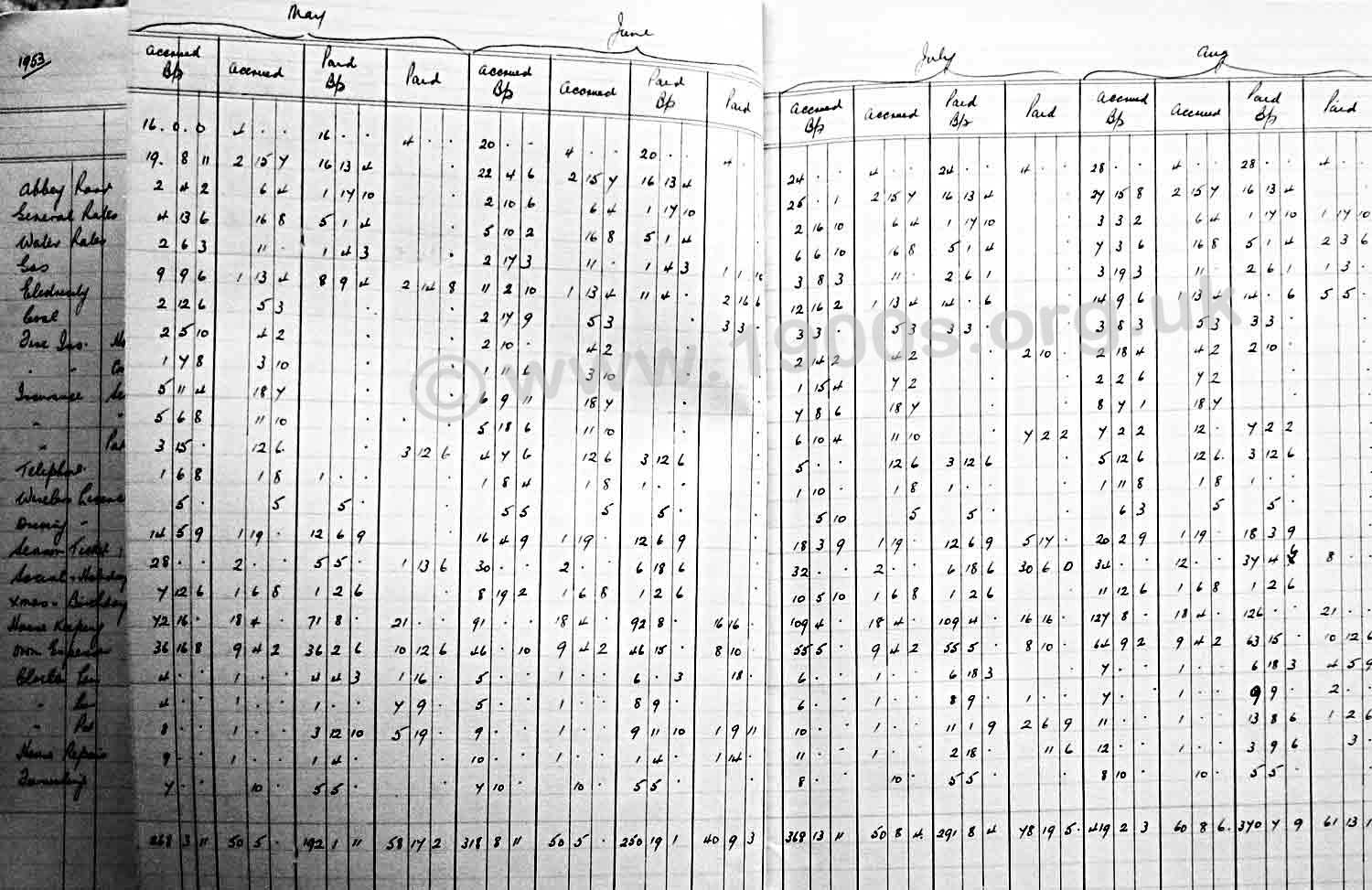
Expenditure May-August 1953 |
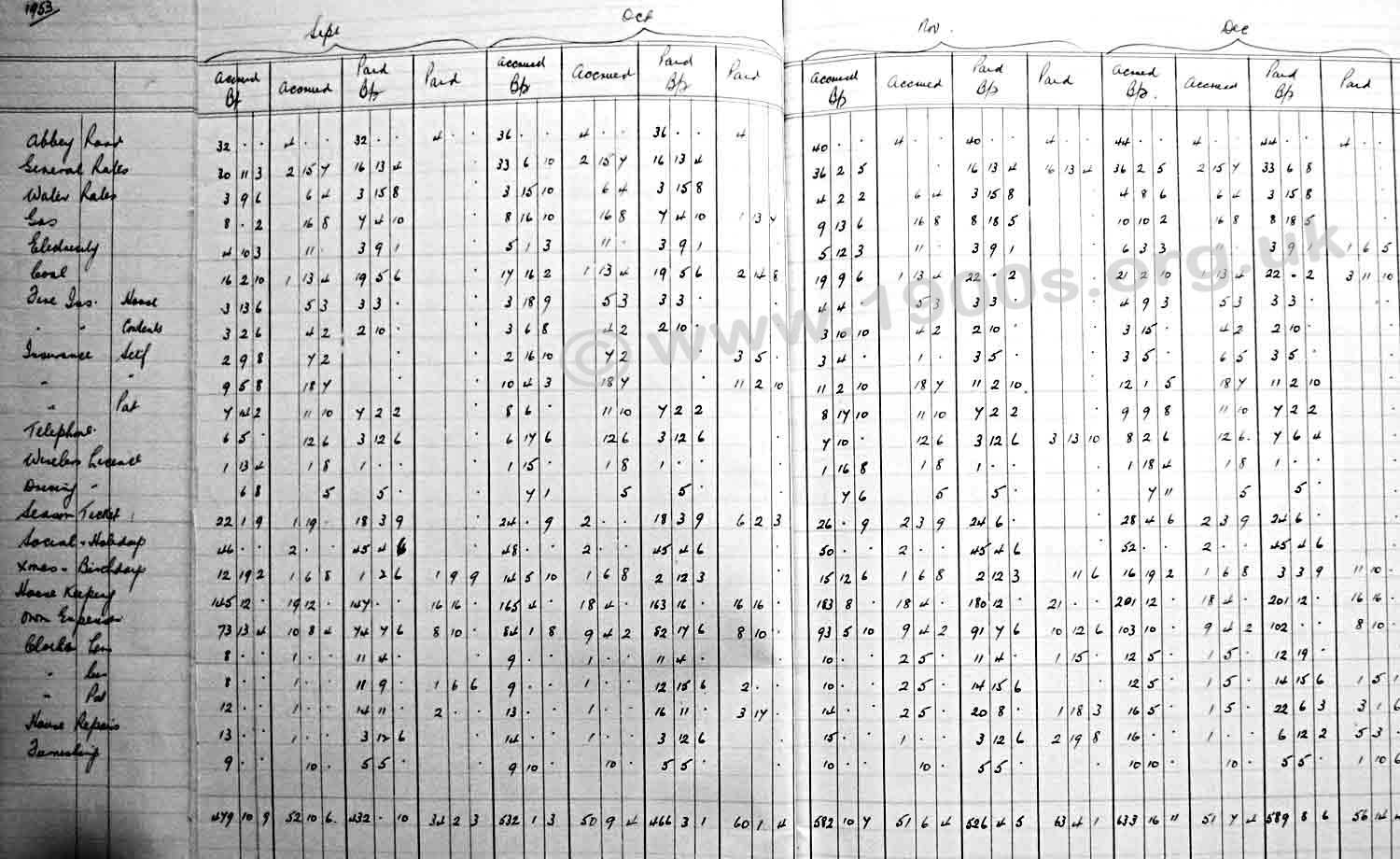
Expenditure September-December 1953 |
| sources | webmaster | contact |
Text and images are copyright
If you can add anything to this page or provide a photo, please contact me.

