 cleaning
sewing
cleaning
sewingand
mending darning how to knit
quickly and
effortlessly new knitting
yarn from
old knitting
patterns and
needles dealing with
moth
damage men's work
and
activities mending boots
and shoes maintenance
and
decorating

Cleaning in working class houses in the 1900s

In Victorian times and the early part of the 20th Century, there were few labour-saving devices for helping to keep the house clean, and in ordinary working-class families there was no money for paid help. The women of the house, the wives and mothers, worked hard, long hours. This page describes the various ways they cleaned floors, rugs and venetian blinds, and what washing up involved.
____
Extracted from the memoirs of the webmaster's mother (1906-2002) and edited by the webmaster with further research
Laying the dust before sweeping
The floor covering in most of the rooms on the Victorian-style houses on our housing estate was known as oilcloth. There was no vinyl. My mother swept it with a broom to remove the surface dirt, but sometimes she squeezed the used tea leaves almost dry and sprinkled them over the floor first to settle the dust. This was called 'laying the dust'.
Washing and scrubbing the floor
My mother washed the oilcloth on her hands and knees using a scrubbing brush and soapy water.
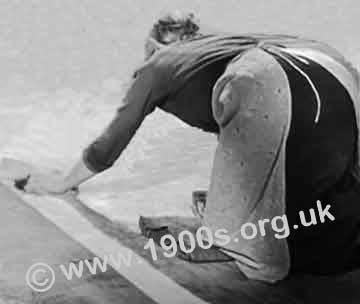
Woman scrubbing on her hands and knees
The soap, soda, scrubbing brush and hot water
The scrubbing brush was bristle set in a wooden handle. The soap was, as always, Sunlight carbolic soap - the same block that we used to wash ourselves. The hot water came from the copper in the scullery or a kettle over the kitchener fire or, in summer when it was too hot for either of these, a primus stove. The water was softened with a few crystals of washing soda, as water where we lived in Edmonton was hard.
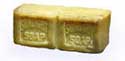
Sunlight carbolic soap, known as 'household soap' used with hot water and washing soda before the age of detergents.
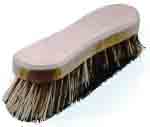
Scrubbing brush
Dusting surfaces
Note from the webmaster
There is nothing in my mother's archives about dusting surfaces. As her own mother must have done it, my mother may have felt that the process was no different to how women dusted in the 1980s when she wrote her recollections. She certainly mentions her mother using a duster in another context. If you can add any information, please let me know.
My mother knew nothing of today's wipes which make dusting so much easier.
Equipment for cleaning rugs
There were no such things as vacuum cleaners and few had heard of a mechanical carpet cleaner which later became known in the UK as a Ewbank. All the cleaning was done by hand with a carpet brush.
Cleaning rugs in good weather
In good weather rugs were cleaned by hanging them on the washing line to let the sun and wind get at them. Sometimes they had a more thorough clean by being beaten while on the line. There were special cane carpet beaters sold specially for the purpose. Clouds of dust came out this way.
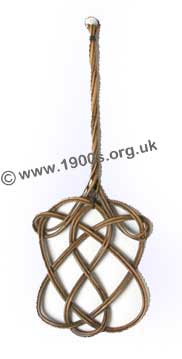
Carpet beater
Cleaning rugs in the snow
In the winter, the rugs were given an extra clean by dragging them over the snow, just quickly enough for them not to get too wet. In the early 1900s when I was a child, it seemed that you could always rely on several snowfalls every winter.
Just imagine what a cold job this must have been.
Cleaning the Venetian blinds
There were no curtains at windows, only the wooden Venetian blinds.
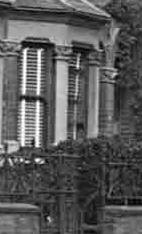
Wooden venetian blinds at windows in the early 1900s
The venetian blinds were made of wooden slats which were heavy and rigid So when they were washed, each slat had to be removed separately and washed individually. The copper would seldom have been lit specially, so it was a job which had to be fitted round other jobs that needed hot water, like the Monday wash. Once washed, the slats had to be dried and polished with a clean duster, then replaced into the cords.
Washing up
Like so much of the other cleaning, washing up was done with hot water, Sunlight soap and a few soda crystals in an enamel bowl. The soda prevented scum forming, but the cups and forks in particular needed a good rinse to wash off the soda, which had a horrible taste.
The washing up was done at the scullery sink. There was a wooden draining board and a wooden plate rack.
Note from the webmaster
There were no non-stick saucepans or cooking pots and no rubber gloves. Women used dishcloths and wire-wool for washing up. Can you imagine what women's hands must have been like with all this washing?
| sources | webmaster | contact |
Text and images are copyright
If you can add anything to this page or provide a photo, please contact me.

