





 radios in WW2 and afterwards
radios for pop music in the 1950s
vintage
radios in WW2 and afterwards
radios for pop music in the 1950s
vintageradios gramophones and radiograms televisions
in homes recording from television libraries
pre-digital admin
in
old libraries


Vintage radios: manufacturers, model numbers photos, notes
By David White, a radio enthusiast and collector
This page provides thumbnail images which open up into detailed photos of a wide range of vintage radios (wirelesses). Included with each one are the make, model number and informative notes.
In what follows, tap, click or hover over thumbnail images for larger versions.
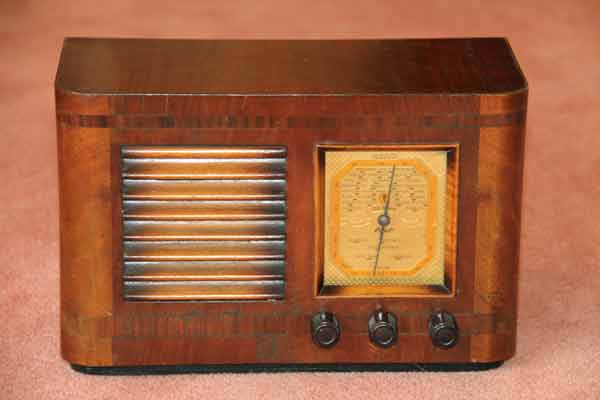
1939: Pilot Maestro
Pilot Maestro, 1939. This British mains-only model had 5 valves and was medium- and long-wave. Working models still available today can fetch £150.
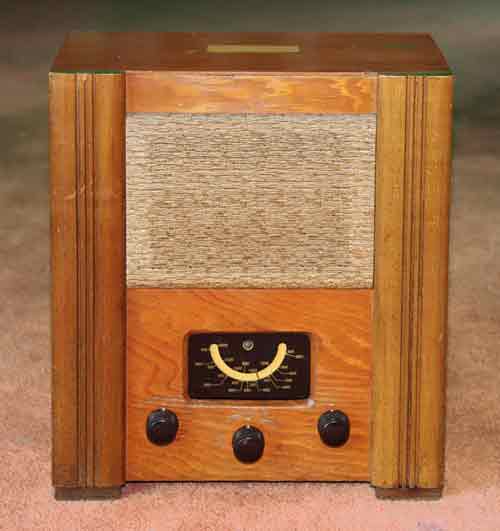
1944: Wartime Civilian Receiver
Wartime Civilian Receiver, 1944. Regularly known as the 'Utility' set, the 1944 Wartime Civilian Receiver was designed Dr G D Reynolds of Murphy Radio Ltd. It was an efficient but very basic, single waveband receiver, covering the medium-waves only, and its rather austere appearance echoed the fact that it had been designed to be produced with the minimum of materials and labour. It was made by over 40 British manufacturers, with valves and other components specially coded for wartime security reasons. It got a name for being the ugliest radio ever made.
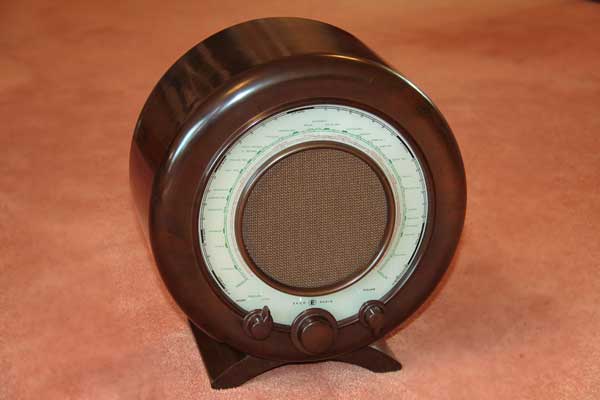
1945: Ekco A22
Ekco A22 1945. Originally designed by the architect Wells Coates, the Round Ekco is the most popular wireless cabinet shape of all time. It was manufactured by E. K. Cole Ltd at their Southend factory, all with moulded bakelite cabinet. A good working model can command £1000 these days.
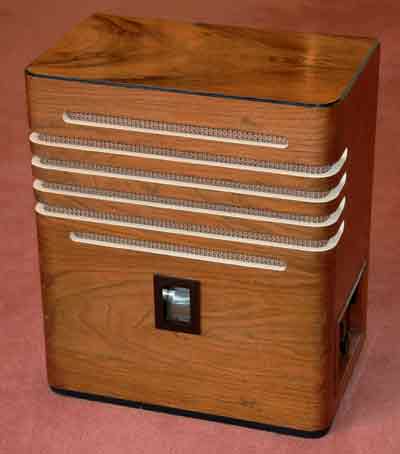
c1947: R I Airflow
R I Airflow, c1947. Radio Instruments superhet 5 valves 3-wave-band with gramophone pick-up socket.
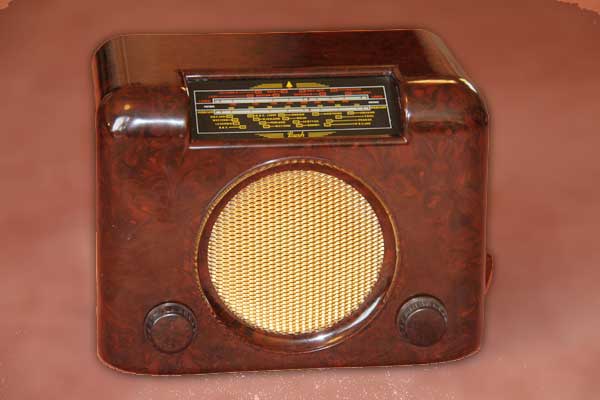
c1950s: Bush D.A.C.90A
Bush D.A.C.90A, c1950s. Bakelite 5-valve medium and long wave portable radio, one of the most popular sets, and easily obtainable 60 years later.
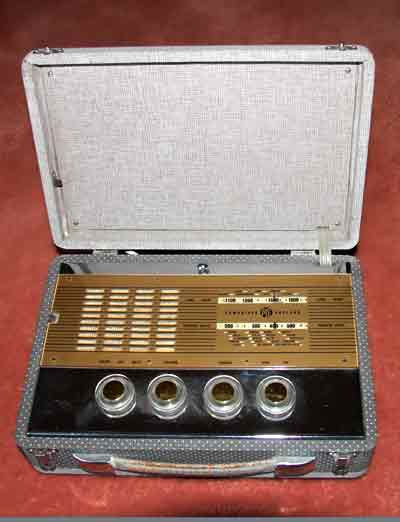
1950s: Pye Jewel case battery/mains
Pye Jewel case (battery/mains), 1950s. Popular in their time, 25-guineas would buy you this 4-valve radio.
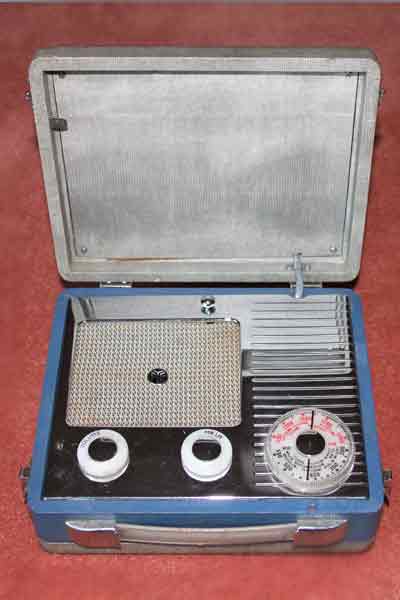
1950s: Pye Jewel case, battery
Pye Jewel case (battery only), 1950s. A battery-only version of the above, costing around 20-guineas.
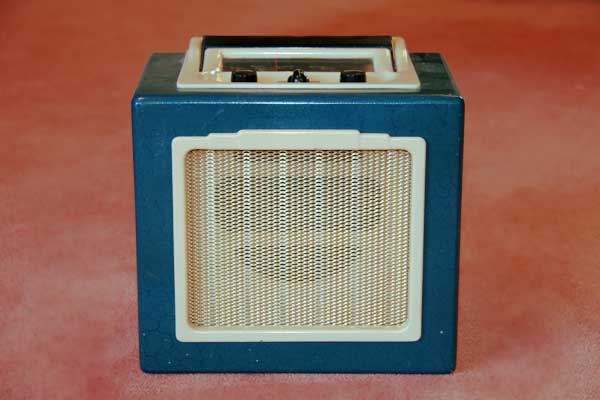
1952: Ever Ready battery/valve
Ever Ready battery/valve, 1952. One of the first 4-valve battery radios, with a combined 90-volt HT and 1.5-volt battery, which would normally last 6-months with average usage. The cost was 17-shillings and six pence.
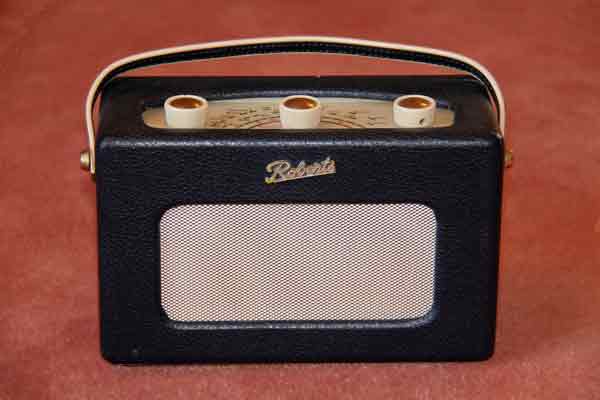
Roberts 200 Transistor, 1959
Roberts 200 Transistor, 1959. British-made in Molesey, Surrey, this 6-transistor radio has become an icon, and similar-style sets are manufactured by Roberts today to include DAB (Digital Audio Broadcast).
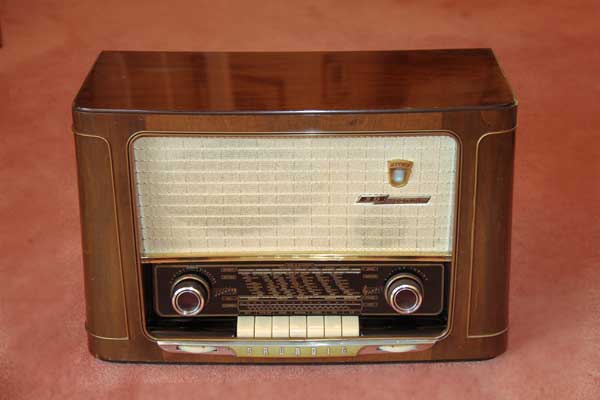
1955: Grundig 2035
Grundig 2035, 1955. This radio had 3 loudspeakers, 6 valves, SW/MW/LW/VHF, with mahogany veneered plywood cabinet. Made in West Germany, it was quite a performer in its day, and cost £57 15s.
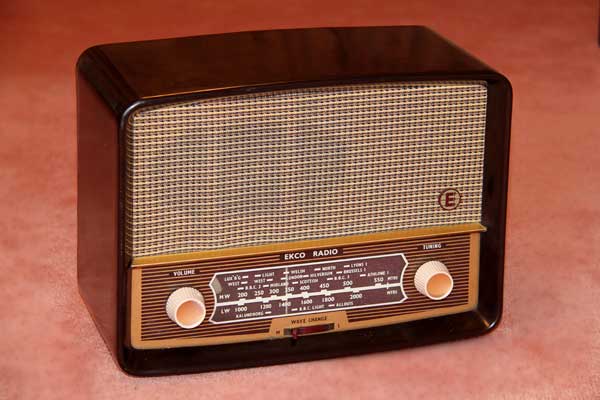
c1957: Ekco U245
Ekco U245, c1957. Medium and long-wave mains radio, a fairly standard model.
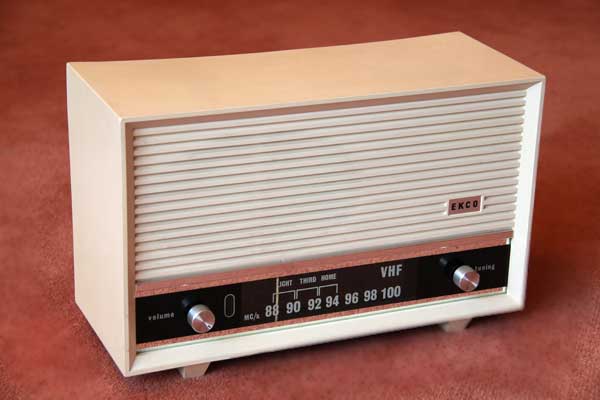
c1958: Ecko U354
Ecko U354, c1958. The Company's first single-band FM mains-operated radio.
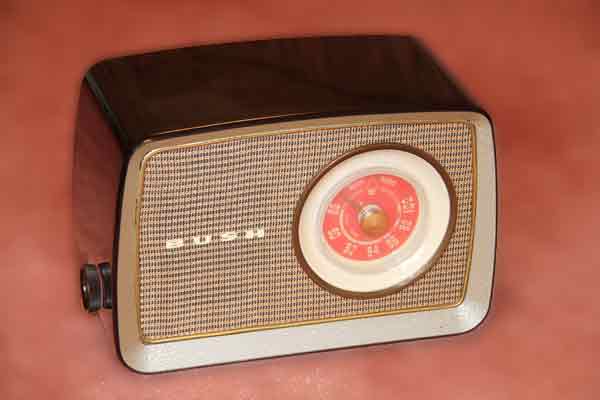
1958: Bush VHF 90A
Bush VHF 90A, 1958. Mains operated FM-only radio in a bakelite case.
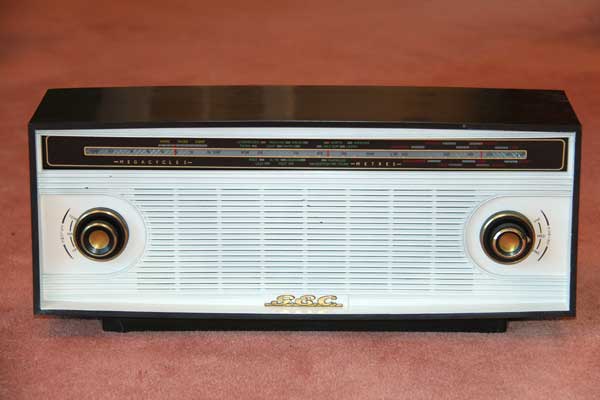
1959: GEC BC402 mains
GEC BC402 mains, 1959. FM version, medium and long-wave 6-valve AC-mains operated radio.
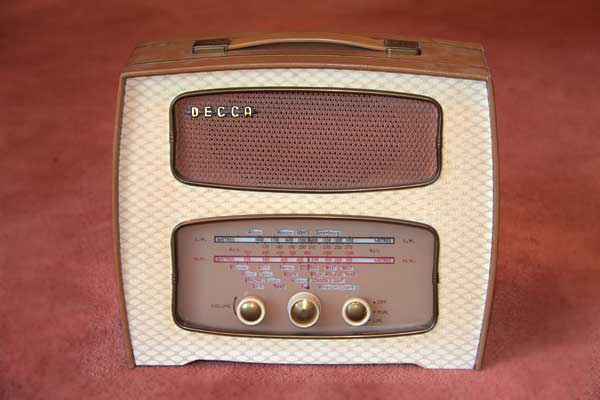
1959: Decca TP22
Decca TP22, 1959. 6 Transistor portable radio, using, unusually, two 6-volt batteries.
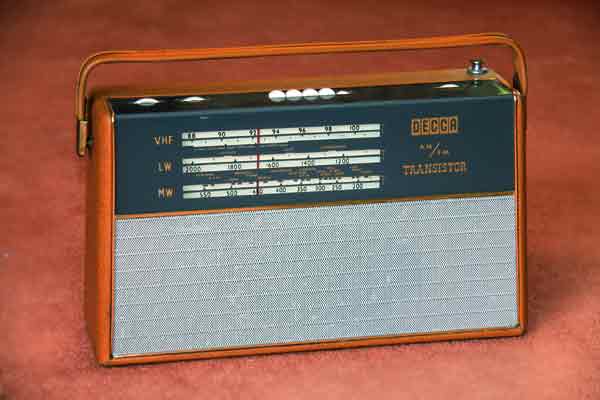
1963: Decca TP85
Decca TP85, 1963. One of the earliest transistor radios, made in the UK.
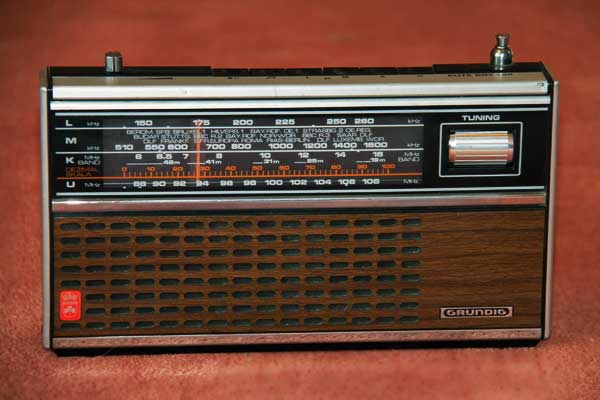
1963: Grundig Elite Boy
Grundig Elite Boy, 1963. MW/LW/SW/VHF mains or battery operated, smaller than the others here.
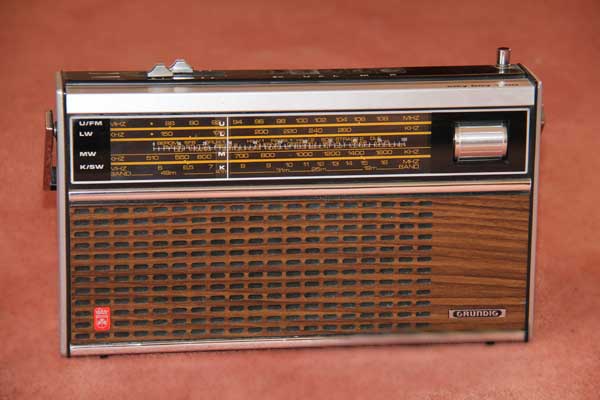
1963: Grundig City Boy 1100
Grundig City Boy 1100, 1963. a modern portable 3-wave-band radio which could also work off the mains. The FM range extended to 108MHz.
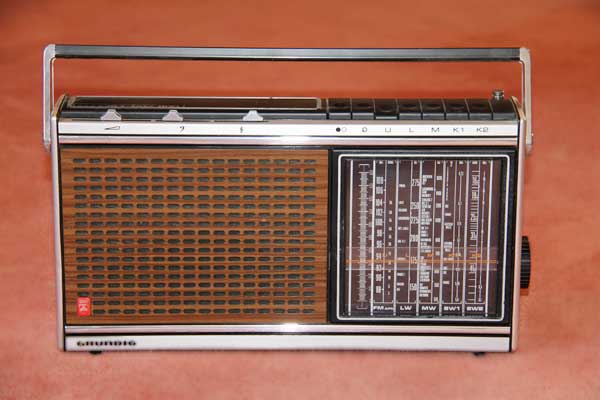
1966: Grundig Concert Boy 1100
Grundig Concert Boy 1100, 1966. a bigger version of the same family of Grundig radios, was good value and had excellent sound quality.
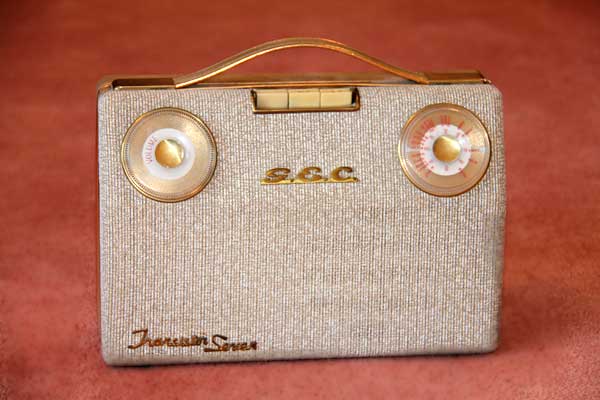
1968: cGEC 7 transistor
GEC 7 transistor, 1968. a long- and medium-wave radio using a PP9 battery which could last years.
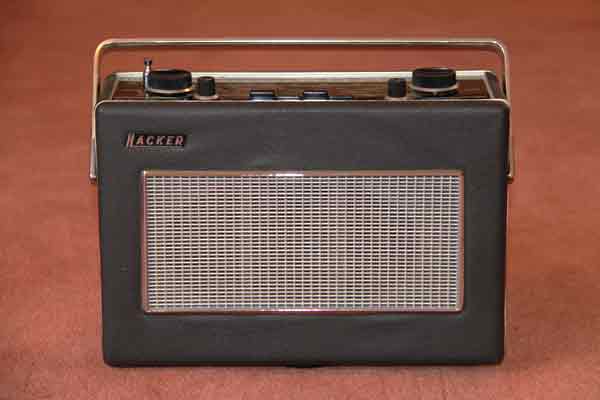
c1970: Hacker Sovereign 2
Hacker Sovereign 2, c1970. British, one of the best quality radios of their time, using two PP9 batteries. Some models had a mains option available.
Page supplied by David White
sources: early 20th century material
sources: ww2 home front and other material
contact
the webmaster/author/researcher/editor
privacy policy

