






 Saturday morning pictures, early
developments: pre-digital
Saturday morning pics 1940s50s
cinemas mid-20th century
inside cinemas mid-20th century
cinema
Saturday morning pictures, early
developments: pre-digital
Saturday morning pics 1940s50s
cinemas mid-20th century
inside cinemas mid-20th century
cinemanews cinema programmes and films cinema usherettes behind scenes
in cinemas mid 20th C closure of cinemas

Cinema programmes and films, 1940s and 1950s UKs
This page is about cinema programmes and films in the 1940s and 50s when home televisions were rare or non-existent, and watching films at cinemas was extremely exciting. The page includes the standard programme format of a main film, second feature, news and trailers; publicity; the film censors' film certifications of U, A and X; and how children managed to get in to see A certificate films illegally.
____
By the webmaster: her early recollections with further research and contributions from others who lived at the time
The format of a standard programme
There was always a main film and what was termed a second feature, along with trailers for future films and a newsreel. This was the contents of 'the programme', and it was shown on a rolling basis. I knew of two, the afternoon showing and the early evening one, but I understand there was a third which went on into the late evening.
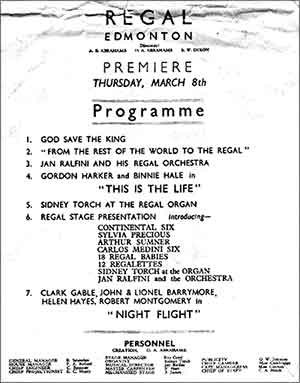
Sample programme from an old cinema confirming the
programme structure described above
Item 1.'God Save the King' means the
National Anthem
A few films were in colour, which added to their attraction, but most films that I remember from my 1940s and 50s childhood where in black and white.
Publicity for forthcoming programmes
Everyone always knew what programme would be showing at the local cinema even though there was no internet to access. There was no shortage of billboards outside cinemas and posters outside newsagents. I understand that the newsagents got complimentary entry tickets in payment.
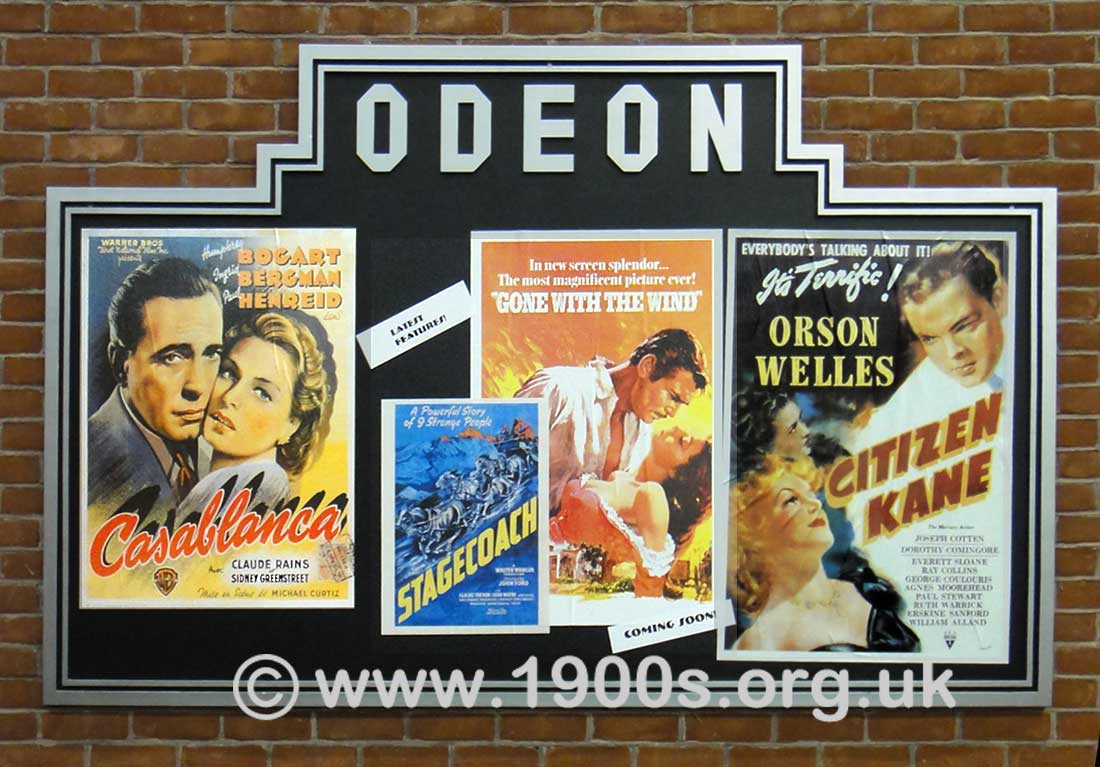
Billboard advertising several films from the 1940s. Photographed in Milestones Museum, Basingstoke.
Programme timings
Although the times of the film showings were advertised, my mother never seemed to take any notice of the starting times, and - judging by how often we had to stand to let newcomers along the rows - she was not alone in this. It was quite normal for us to arrive in the middle of a film and 'see it round' in the next sequence and hence put together the story line afterwards. I suppose that the enjoyment of the event was in seeing people moving around on a large screen. Television in the home didn't arrive until the 1950s, primarily for the coronation of Queen Elizabeth in 1953, and then by no means for everyone.
Late arrivals were actually very disruptive as everyone in their line of seats had to stand and push their seats up to let the latecomers pass - even in the middle of the films.
In my experience people always tried to watch the feature film, ie the A rated film, from the beginning, even if they had to arrive in the middle of the other items.
Desmond Dyer
As cinemas were always dark during performances, anyone who arrived while a film was running would be directed to their seats by usherettes with torches.
Film ratings: U, A and X
Films were rated formally and informally, and the definitions of what the ratings were and who could see what rating changed over the years. This page is about what I experienced growing up in the 1940s and 50s.
In the 1940s and 1950s I remember three formal ratings categories for films, U, A, and X, but there was also the informal B rating for the second feature which was perceived as the poorer of the two films.
The rating certificate for a film was always displayed at its start.
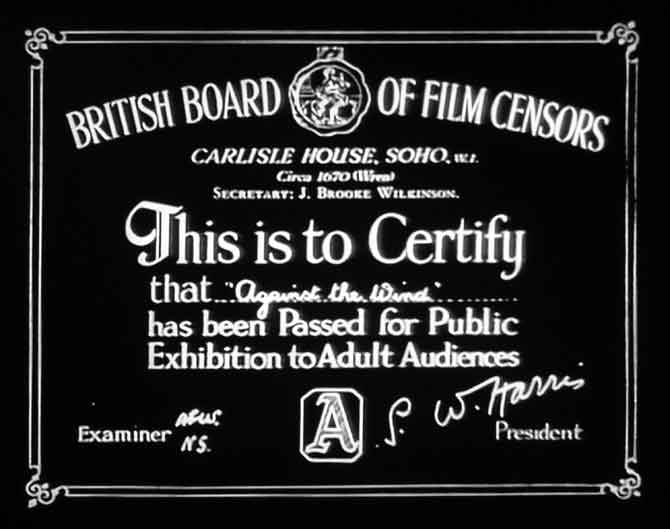
Censor certificate showing the rating certificate for a film - always displayed at it start
U rated films
There were no age restrictions for admission to U rated films. This meant that children were allowed in unaccompanied by an adult. All the films shown in Saturday Morning Pictures were U rated.
A rated films
A rated films were designed for adult viewing and children under 12 were only admitted if accompanied by an adult.
How children managed to see A rated films unaccompanied
I always felt sorry for children in the school holidays when an A film was being shown. When I saw them waiting around in front of the cinema looking wistful, I often asked them if they would like to come in with me. They were clearly delighted, gave me their money and stayed at my side until inside the cinema. I suppose I was doing wrong, but I was never found out, and I know that I gave these children a lot of pleasure. Anyway, the content of these films was pretty mild by the standards of today.
Doris Clarke
X rated films
X rated films were for adults only and were either horror or sexually explicit. I never saw any. Later, I understand, horror films were given their own H rating.
Interruptions to the programme: broken films
The film was stored on large reels and during projection it wound from a full reel to an empty one. Not infrequently the film broke. There was a whirring sound, the screen went messy and then black. After perhaps half a minute, the film started again, the projectionist having spliced the film back together.
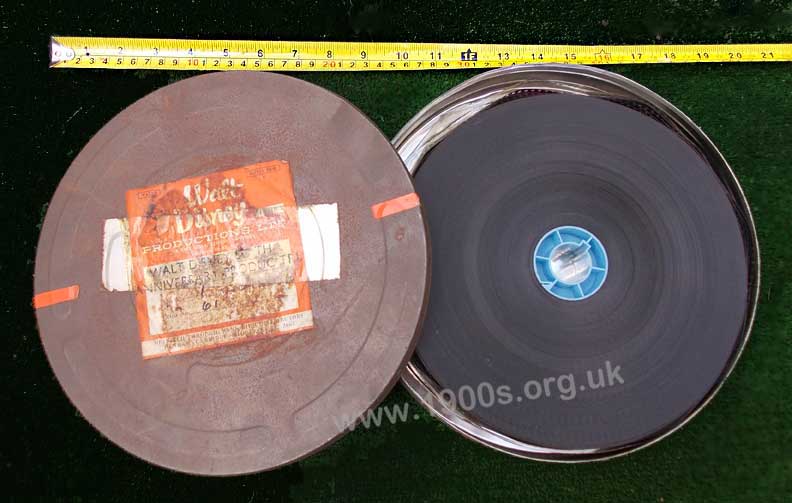
Can of cinema film showing its size against a ruler
The projectionist's task when a film broke
When the film broke it could be very hectic for the projectionist. Fortunately it did not happen often. If it broke near the bottom spool sometimes you could wrap it around the bottom spool without shutting down. If it broke anywhere else in the projector, though, you had to shut down and re-lace the projector while the audience sat waiting. Afterwards you had to explain what happened to the Manager and write a report for head office.
David Daniells
former projectionist at the Regal cinema, Edmonton
On-screen messages
Sometimes the flow of the film was interrupted by a handwritten message superimposed on the screen. Presumably someone had come in from outside needing to contact a customer urgently.
The message usually just asked a particular person to come to Reception. It happened to me the day my father died in 1971, which was the last time I ever went to the Edgware Ritz.
The call of the cinema over the air-raid shelter in wartime
One day during WW2 I was sitting in the Regal Cinema in Edmonton when a message come up on the screen stating, "An air raid is in progress. Anybody wishing to leave the cinema to shelter can do so". The film continued to run and nobody moved. There was a saying at the time, "If it's got your name on it, it will get you [anyway, wherever you are]"
Peter Johnson
The national anthem
At the end of the late evening programme, the organ played the National Anthem. I am told that something appropriate like the Union Jack or the royal family was shown on the screen at the same time. Everyone - well, almost everyone - stood for the National Anthem. Occasionally a few people made a beeline for the exit before the National Anthem started, but everyone else glared at them. I don't suppose they noticed.
If you can add anything to this page or provide a photo, I would be pleased if you would contact me.
Text and images are copyright
sources: early 20th century material
sources: ww2 home front and other material
contact
the webmaster/author/researcher/editor
privacy policy

