 London
buses bus
conductors London
bus drivers bus
tickets bus
stops London
Underground
trains inside
Underground
trains

London bus stops, mid-20th Century and experiences of using them
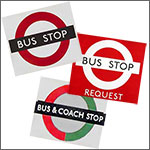
Bus stops are of course where buses stop to let passengers off and collect new passengers. This page describes and illustrates the different types of bus stop in the wider London area in the mid-20th Century, where they were located, how to recognise them, what it was like to wait for a bus at them and how digital technology has improved the wait.
____
Two types of London bus stop: regular and request
There were two main types of London bus stop when I was growing up in the 1940s and early 50s.
The sign for one had a white background, and buses always stopped there, irrespective of whether anyone wanted to get on or off. The sign for the other had a red background and was known as a 'request' stop. Buses only stopped there if a passenger inside the bus rang the bell or if someone at the request stop held out his or her arm. Both had BUS STOP written inside the crossbar of the London Transport symbol and the request stop had REQUEST written along the bottom edge.
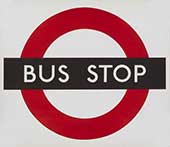
Regular London bus stop sign
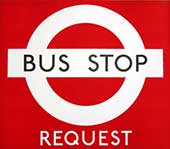
London request bus stop sign
Photographed in the London Transport Museum
Bus top signs were mounted on strong tall poles so that they were easy to see.
The following image shows a request stop with a woman hailing the bus to ask it to stop.
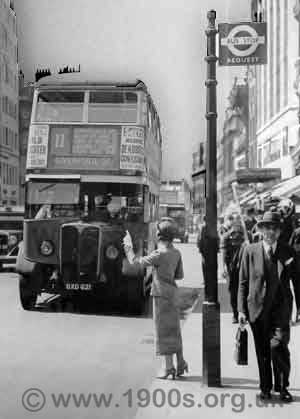
Hailing a London bus at a request stop by holding out the left arm. A detail from a photo in the London Transport Museum.
As shown in the photo, the bus sign does not have any other signs attached to it.
Later bus stops
Later bus stop signs were taller, showing the numbers of all the buses that stop there. Some doubled as coach stops as shown in the following image.
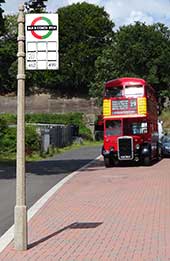
Bus stop showing other routes and doubling as a coach stop
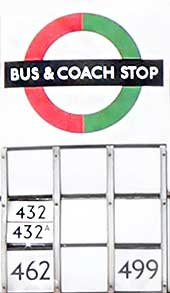
In contrast, today's London bus stops tend to have additional signs below them such as the fare stage, i.e. the name of where the bus stop is, and some also have a computerised display showing when a particular bus is due at the bus stop - all helpful additions which did not exist when I was growing up.
Waiting for a bus at a bus stop
Waiting at a bus stop was frustrating because there was no way of knowing how long the wait would be. It was rare for a timetable to be posted up, and timetables were unreliable anyway. How much better the computerised system of today!
In all but the warmest of weathers, waiting was also a chilly business because bus stops were located in prominent positions so that they could be seen which meant that the wind caught them. Shelters were rare and, if they did exist, they were open at the sides or bottoms, presumably to prevent litter collecting. So feet got very cold in winter. Or perhaps the problem was with the shoes that we wore because there were no man-made fabrics. I did manage sheep-skin boots, but they were very expensive.
Waiting for a bus at a bus station / terminus
As London buses had no doors, there was nothing to stop us waiting inside a bus at a bus station.
As Edgware, where I lived, was a terminus for the buses in the area, at least the waits for our outward journeys were out of the wind.
| sources | webmaster | contact |
Text and images are copyright
If you can add anything to this page or provide a photo, please contact me.

