






 train travel
in
WW2 Britain 1st 2nd & 3rd class
trains train
tickets forces'
travel warrants train ticket
inspection station
platforms inside early
passenger trains early train
windows early train
doors early train
lavatories level
crossings

Manually operated level crossings for trains crossing roads
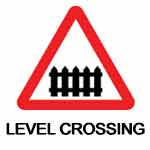
A level crossing is where a railway line crosses a road or other track. There are normally barriers of some sort which can be moved to block the road if a train is due or block the railway to let vehicles pass if no train is expected. The railway lines are inset into the road so that it is level for vehicles - hence the name level crossing. In Britain in the 1940s and 50s, the standard barriers were gates which were swung open and closed manually by a railway employee. After a short commentary, this page shows and explains pictures of the stages of the operation.
____
By the webmaster based on her early recollections with additional research and discussions with older people who used level crossings frequently
Why level crossings were more common in the past
There were many more railway networks back in the 1940s and 1950s because the severe and extensive closures, known as the Beeching Cuts did not occur until after the Beeching Report of 1963. Also there were no carfully routed motorways. The first, the M1, was not opened until 1959. So, with cars and other veicles having no option but to use mirriads of small roads and railway lines spreading out to mirriads of small villages, it was relatively common for drivers to need to cross a railway line. So level crossings were fairly common.
Pedestrian gates
Priority was always for trains rather than road transport and as the gates had to be swung into position in good time, there were inevitably quite lengthy delays for vehicles. For pedestrians, though, who could nip through quite quickly, there was a small side gate, known as a pedestrian gate for them to use at their own discretion if the train seemed to be a long way off. It didn't get locked at any stage. So if pedestrians didn't want the train to run them over, they really did have to use their discretion on using it.
Tap/click the following images for larger ones*
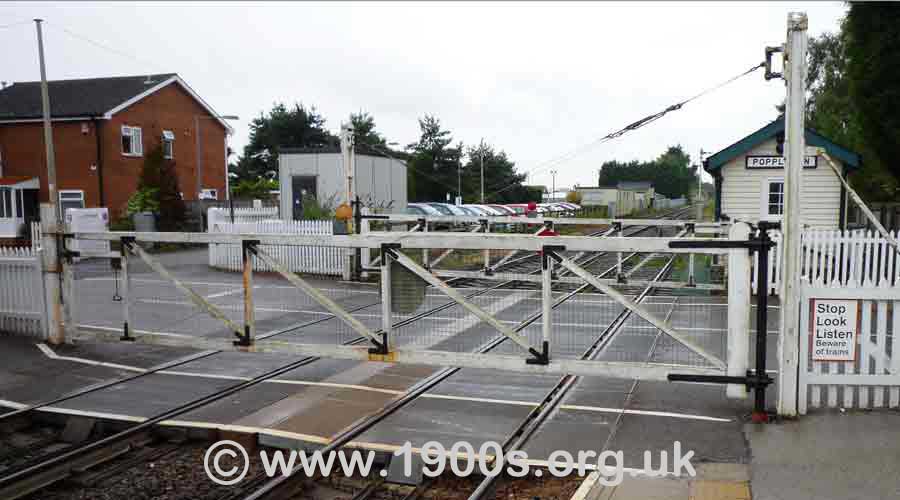
Old-style manual level crossing with gates open to road traffic and closed for passing trains
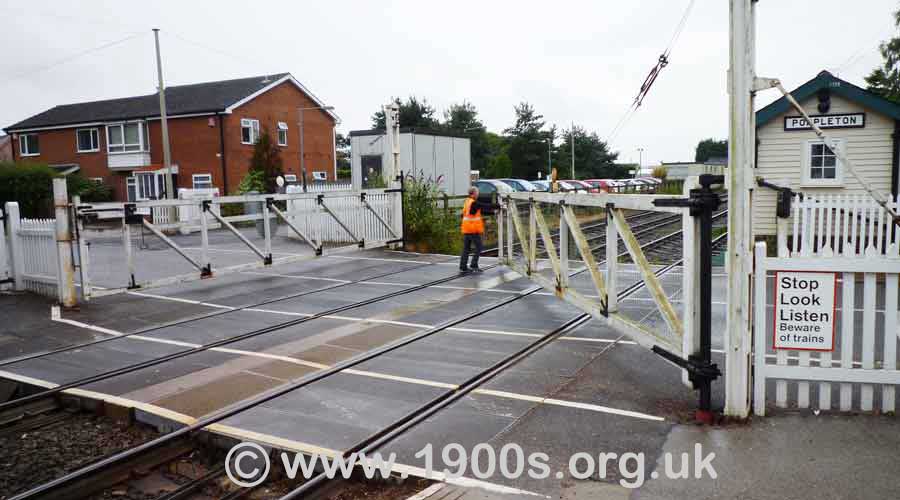
A railway worker opening the gates for trains of an old-style manual level crossing, so closing them to road traffic
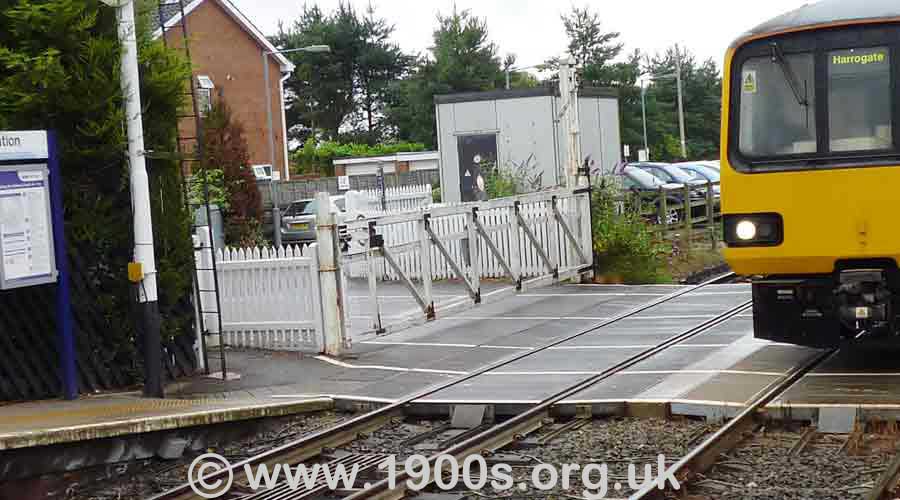
Old-style manual level crossing closed for road traffic and open for trains
Who managed the gates?
Manual level crossings had to be manned. The man - or occasionally a woman during the war - sat in an adjacent cabin which you can see on the right of the second photo. When a train was due, he came out to swing the gates manually in all weathers to let the train through and hold up the road traffic. Then, when the train had passed, he had to come out again to swing the gates back. It was very labour intensive and today's electrically-controlled gates are clearly an improvement. I have been given one report of an accident where a train smashed through gates at speed. This was in the late 1940s in the village of Shelford. There was a rail junction and a signal box controlling where a side line joined the main line from London to Cambridge. No one was hurt but it certainly made a considerable mess.
Text and images are copyright
*Photographed by the webmaster in at Poppleton Station
sources: early 20th century material
sources: ww2 home front and other material
contact
the webmaster/author/researcher/editor
privacy policy

