






 train travel
in
WW2 Britain 1st 2nd & 3rd class
trains train
tickets forces'
travel warrants train ticket
inspection station
platforms inside early
passenger trains early train
windows early train
doors early train
lavatories level
crossings

Railway station platforms of the past, UK
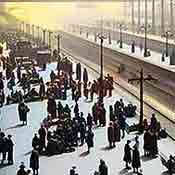
There was a lot to see on railway station platforms in the first part of the 20th Century. This page explains. It starts with the sights and sounds on platforms of large terminus or hub stations and continues with the very different smaller platforms of intermediate stops along the lines. It is one of a series on train travel in yesteryear - see the above menu.
____
By the webmaster based on her early recollections with additional research and firsthand contributions
Railway stations crowds and noise
The platforms of the busy hub stations of the large cities were accessed through barriers which were either locked when no train was due or staffed by station staff in dark uniforms and hats. When locked, the platform beyond was still and silent into the far distance. In dramatic contrast, when a train was in and the barriers were opened, everything changed:
Platforms were crowded, noisy places. Departing passengers always seemed to be in a hurry to get onto the platform either to get a good seat or to locate a booked one, and friends and relatives were their, either to say their goodbyes or to meet passengers off the train. At that time, there were platform tickets for non-passenger to get onto platforms.
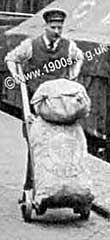
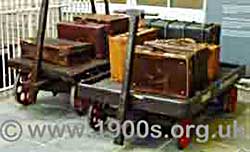
Porters, with trolleys waiting to carry passengers' luggage, had to be negotiated round or located - and this added to the melee.
Then there was the banging of train doors opening and closing and windows too, as passenger said their goodbyes to relatives and friends and hauled luggage on the train. Remember that the train windows opened so that passengers could lean out.
Crowds at the barriers were worse with arrivals because everyone wanted to get out as quickly as possible, and their tickets had to be checked and collected by the inspectors. It amazed me how quickly they did it - and it was not unusual for individuals to be called back because something was wrong with their tickets.
Essentially there was a hubbub of activity and noise.
Engines letting off steam
The unique sound of engines letting off steam deserves a special mention.
In everyday language, the phrase 'letting off steam' means releasing pent-up energy or frustration, but its origins lie in what was always heard on platforms of large terminus stations when the trains were stationary at the end of their journey. Because their engines used steam to generate the power to pull the trains, the excess steam had to be released at the end of a journey when no longer needed. Otherwise there would be a dangerous buildup of pressure in the boiler. The sound was a sudden, very loud hissing noise, really loud, and close to us as we queued at the exit barrier, the engine being at the front of the train and the barriers being at the entrance to the platforms.
Porters
The porters on the platforms of the large stations were ready and waiting to earn a tip by carrying passengers' luggage for them. (How this has changed!) They had special trucks and trolleys as shown in the photographs which we had to negotiate around. They did a good trade and always seemed to be in demand.
Platform seats
On platforms of the smaller intermediate stations, there were seats for passengers who preferred to sit while waiting for a train. (On the large interchange stations, they were in the station concourse.) These seats, like so many other things at that time, were made of wood, but not to a standard style. Being wood, they had the advantage of not feeling cold to sit on, but they did of course need regular maintenance with coats of varnish. The photos show some examples.
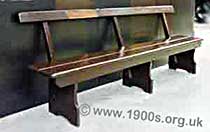
British Rail station seat
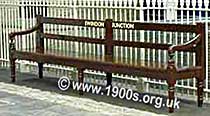
British Rail station bench seat with a back, labelled with its home station
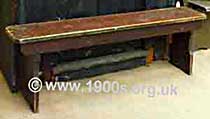
British Rail basic bench seat with no back
I remember sitting on one not so many years ago because I was of an age when it was a normal thing to do and I hadn't given it a second thought. Immediately, I was politely asked to move because it was part of the set of a period film being shot at the station!
Station names removed in the war
During the war, all outdoor place names were removed so as to be of no help to an invading army - and this included the names of stations along routes.
An amusing example of platforms with no place name
There was a television programme I watched some years back in which someone who travelled on a train during the war commented, "I was really surprised at how every time we came to a station, the place seemed to be called 'gentlemen'". He didn't realise that the station names had been taken down and that what he was seeing merely indicated where the toilets were.
Patrick Wood
In fact street names and signposts were also taken down and milestones were buried.
One the pictures of station benches shows the station name which means that it was either before or after the war.
Enamelled advertisements
On the walls or fences of platforms of the intermediate stations were advertisements. These were typical of the times, in that they were enamel on metal. The enamel gave an attractive glossy finish and was relatively weatherproof. However, by the time that I remember them during the Second World War, they had invariably been chipped, letting the damp in and causing rust - see the photos below. I never noticed any new ones after the war, probably because plastics were coming in.
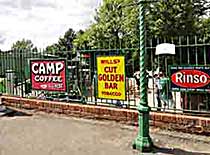
Station platform showing enamelled adverts**

A rusting enamelled advert**
If you can add anything to this page or provide a photo, I would be pleased if you would contact me.
Text and images are copyright
*Photographed by the webmaster in the Steam Museum at
Swindon
**Photographed by the webmaster on Watercress the (Heritage) Line
sources: early 20th century material
sources: ww2 home front and other material
contact
the webmaster/author/researcher/editor
privacy policy

