






 house price
SE England
late 1930s furniture
prices costs of
floor
covering price of a
radio/wireless
in 1938 costs of
house
maintenance cost of house
insurance
1938 household
accounts
1950s/60s inflation from
annual family
expenditure monthly
expenditure
1950s


Lino/linoleum and oilcloth with costs and prices pre-WW2 in the UK
Linoleum, or lino, was popular for floor covering in the past. It was often confused with the thinner and cheaper oilcloth. This page gives more details of what lino and oilcloth are and the differences between them. Today, both have been superseded with vinyl. The page also gives images and transcripts of bills and receipts showing the prices of lino flooring in the UK just before WW2W2. Interesting examples of inflation.
____
By the webmaster: her childhood recollections and further research with contributions from others who lived at the time
In July 1938 my parents married and set up home 9 Brook Avenue, Edgware, Middlesex on the northern edge of London's suburbia. My father had bought the house in the previous April. The floor covering was almost entirely linoleum, shortened to lino, although my mother insisted on calling it oilcloth as that was the floor covering in her childhood.
Linoleum, oilcloth and American cloth: what they were and how they were different
Both linoleum (also known as lino) and oilcloth were sold as easy-to-clean, waterproof floor covering. Both came in a variety of colours and patterns and both were made of similar natural materials primarily boiled, oxidised linseed oil. The difference was that lino was thicker because it had more layers, it contained stouter bulking material such as cork and its backing was strong canvas known as burlap. In contrast, the backing of oilcloth was linen and its bulking material was cheaper like finely ground wood chips known as wood flour, or even potato flour. It always looked as if it was varnished, but whether it was bought this way or varnished on site, I can't say.
Oilcloth and lino were sold in rolls wide enough to cover a small room. Sheets cut from the rolls could be joined reasonably seamlessly to cover any size floor.
Lino tiles were particular popular in bathrooms and kitchens.
Today, both lino and oilcloth have been overtaken by vinyl floor covering.
Incidentally an even thinner covering backed with cotton fabric was called 'American cloth' which was particularly suitable for table cloths because it was flexible, waterproof, didn't easily crease and wiped clean. Today, the terms American cloth and oil cloth are often used interchangeably, but they were quite different in the past.
Neil Cryer
Lino for artwork
I used lino in art classes at school and clearly remember its canvas backing. We children were given a square of it about 20cm by 20cm and a knife to cut out a pattern or picture in its front surface. Then we either rolled or painted ink onto it and pressed the lino onto paper. This put the picture onto the paper in relief, with the uncut surfaces colouring the paper. We could use our linocut quite a number of times to repeat our pattern or picture. The trick was to cut into the lino just the right amount: too far and the lino lost its strength and not far enough and the resulting picture had untidy edges.
Keith Munday
Costs of lino flooring then and now
In 1938 my father bought new lino flooring for every room in the house. Here is a transcript of the estimate.
| TRANSCRIPTION | |
| Front bedroom | £3- 2-1½ |
| Small front bedroom | 17-9 |
| Landing | £1- 2-2 |
| Back bedroom | £2-13-3 |
| Hall | £2-18-6 |
| Kitchen | £1-14-0 |
| Back room downstairs | £4- 9-9 |
An image of the actual 1938 estimate is below. It enlarges to a legible size on tap/click and show that the cost of the lino flooring for the entire house was £17.17.0. There was a £1 addition for purchase tax with a £6 reduction, presumably for the large size of the sale, making £12.17.0 in all. How would you like to buy floor covering for an entire house today for less than £13 ! And how's that for inflation!
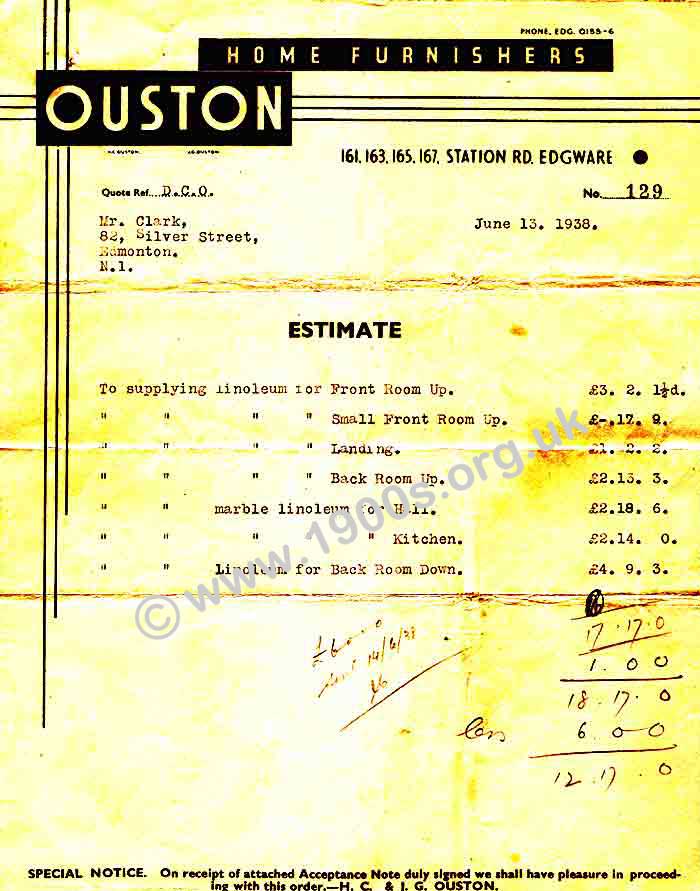
1938 estimate for lino floor covering for an entire house by room
The following receipt shows the cost/yard of sheet lino floor covering at the time: 2/11 that is 2 shilling and 11 pence - almost three shillings which in today's money is 15p !
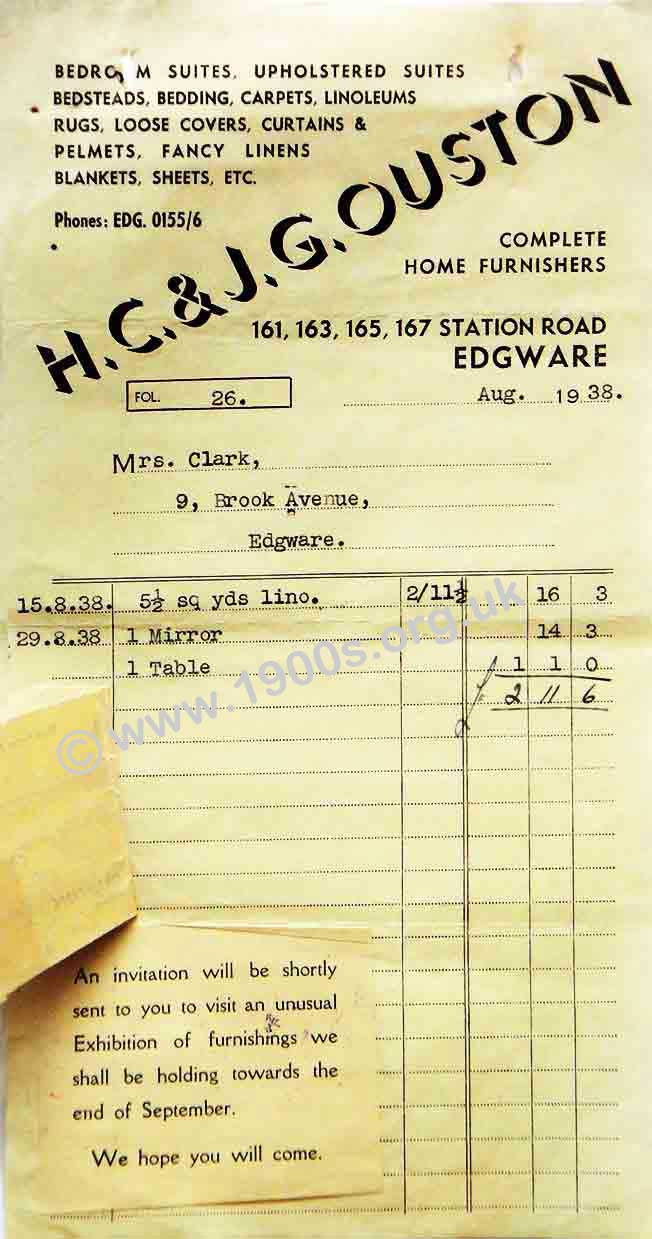
1938 receipt for sheet lino showing the price/yard.
Tap/click for a larger, legible version
These prices are of course pre-war, ie before the onset of World War Two. The impact of the war was yet to hit.
Lino tiles
There is no record for the bathroom and lavatory floors. These were black and white lino tiles which were probably fitted when the house was built as everyone seemed to have the same in their bathrooms and lavatories. There were also matching black and white ceramic wall tiles.
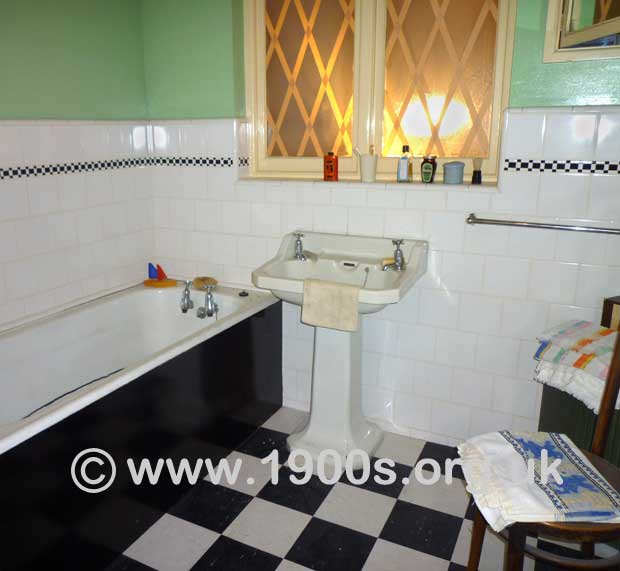
Black and white lino tiles, which seemed to be on the floor of every bathroom of houses built in the 1930s. Photographed in The Imperial War Museum.
Apart from the position of the window and the colour of the top halves of the walls, the above photo could have been of my parents' bathroom. Its walls were all white gloss paint. There was no emulsion paint at the time.
Carpets and rugs
Vinyl floor coverings were years in the future, and no ordinary families had fitted carpets, although I do remember small rectangular mats in the hall, just outside the doorways to the living rooms, presumably against draughts. There were also various other rugs, but there is no record of their purchase, and they were probably bought later or inherited.
Text and images are copyright
sources: early 20th century material
sources: ww2 home front and other material
contact
the webmaster/author/researcher/editor
privacy policy

