





 old
oldchemists old
chemists
remedies old newsagents Victorian & Edwardian post offices old
barbers
shops old
hardware shops old
drapers
shops old
cobblers
shops old
furniture shops old
pawnbrokers old
corn chandlers
pet shops


Posting mail in Victorian and Edwardian UK
____
By the webmaster, based childhood observations and additional research
My mother's memoirs described the postmen and telegraph boys of her childhood in the early 1900s, but did not mention the post office or posting letters. I have tried to discover what Edwardian post offices and post boxes were like from museums, old books and pictures. This page illustrates what I have discovered so far. If you can add anything or correct a misunderstanding, do please let me know.
In the early 1900s, which were Edwardian times, the post offices and post boxes would have been much as they were in Victorian times. I have certainly found Edwardian stamps, but not yet an Edwardian post box.
The Victorian/Edwardian Post Office
A lot of information can be gleaned from old pictures. If you can can highlight some, please contact me.
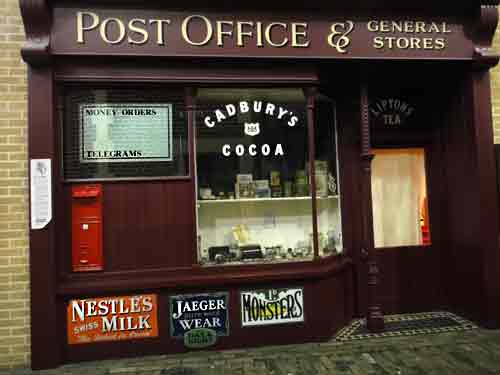
Life-size reproduction Edwardian Post Office in Milestones Museum, Basingstoke.
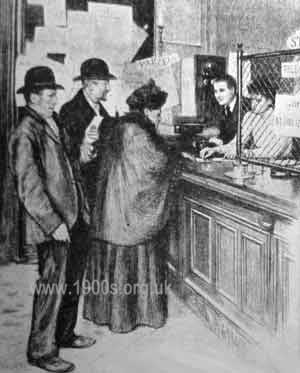
Inside a late Victorian or Edwardian Post Office - a picture from an old book in my mother's effects.
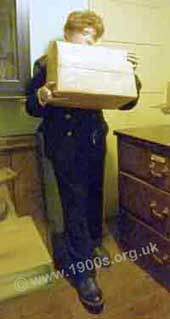
Model of a post boy collecting a parcel for delivery - photographed in Milton Keynes Museum.
Where is his cap?
Victorian post boxes still in use in Edwardian times
There were post boxes on street corners and in other convenient places, so that people did not have to go to the Post Office.
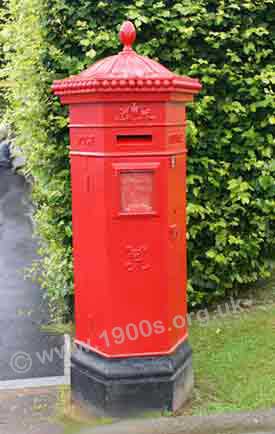
A Victorian pillar box / post box - photographed in Fagans Museum of Welsh Life.
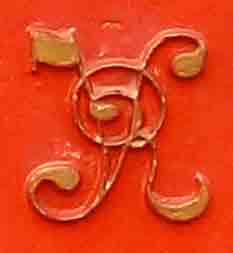
The decorative scroll half-way up the letter box is actually the initials VR entwined. They stand for Victoria Regina. 'Regina' is the official title for a Queen.
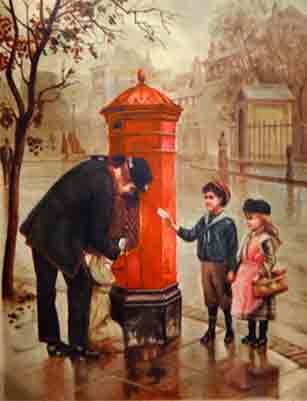
Posting a letter in a Victorian post box, still in use in the early 20th Century. From a magazine in my mother's effects.
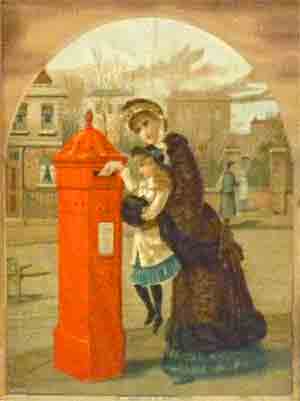
Posting a letter in a Victorian post box - detail from a picture in Fagans Museum of Welsh Life.
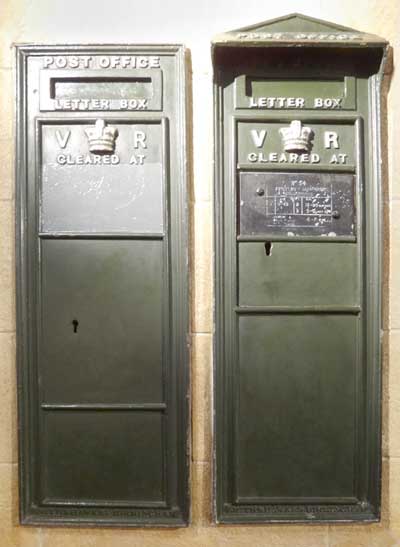
Interestingly not all Victorian post boxes were red. These photographed in Bath Postal Museum were dark green.
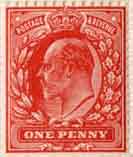
Edwardian postage stamp
If you can add anything to this page or provide a photo, I would be pleased if you would contact me.
Text and images are copyright
sources: early 20th century material
sources: ww2 home front and other material
contact
the webmaster/author/researcher/editor
privacy policy

