





 school holidays
hobbies
swimming baths
Sunday
school holidays
hobbies
swimming baths
Sundayschool Boys Life Brigade seaside
play swimming in WW2 &
afterwards


Children's hobbies in the past: collecting sets of things

In the past, children amused themselves by collecting sets of things like cigarette cards, used postage stamps, bible stamps, marbles and autographs that they would keep in a box or a book of some sort. Money was short so these hobbies were free, or effectively free, being swopped for something else with other children. This page describes the hobbies and asks what the alternatives are today.
____
By the webmaster's mother (1906-2002) from firsthand observations, edited with further research by the webmaster
Collecting cigarette cards
A firm favourite for collecting was cigarette cards. Cigarette manufacturers, notably Players and Wills put a card in each packet of their cigarettes showing a picture on one side and descriptive information on the other side.
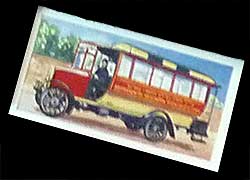
A cigarette card
Next: Old
cigarette packets. These and other brands would have contained a collectable
cigarette cards.
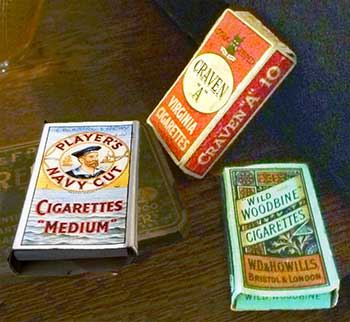
Smoking was common among the men, so it wasn't difficult for children to find someone to save cigarette cards for them. Often, though, the same cigarette card would keep appearing whereas some hardly ever seemed to. This led to swapping of cards which was another spirited and enjoyable activity for children.
Albums for the collection could be bought from tobacconists for a penny. Filled ones have become collectors' items.
Cigarette cards were produced in themes such as trains, flowers, sportsmen, etc. Children would aim to collect a complete set on a particular theme so that they could complete an album.
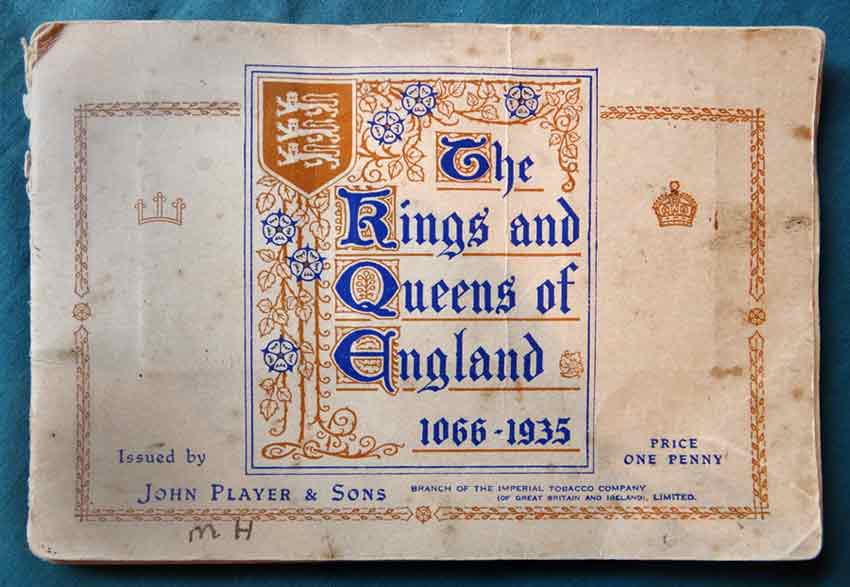
Sample of a themed cigarette card album front cover from the 1930s put up by Players Cigarettes and costing one penny.
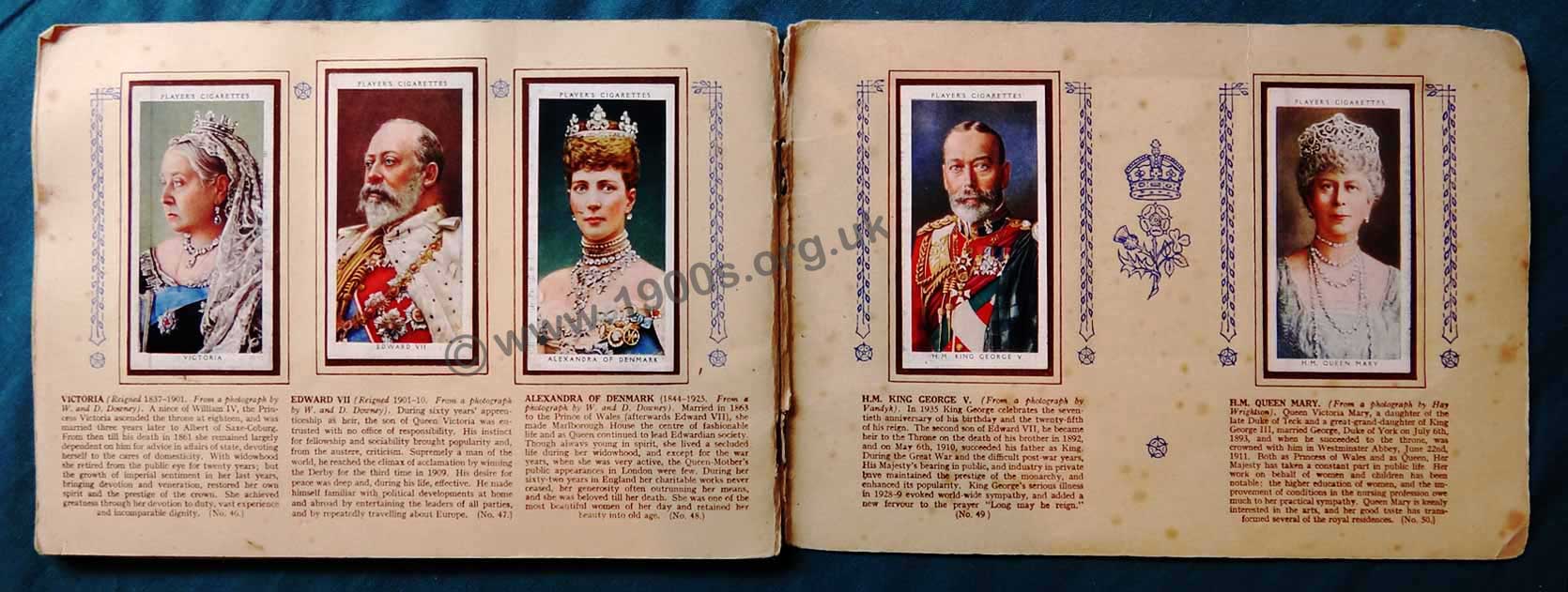
Sample of a themed cigarette card album - double page spread inside showing pictures of kings and queens with information about them. Photographed in The West Somerset Rural Life Museum.
On the backs of the cigarette cards was information about the topic illustrated on the front. This was usually very informative and it was repeated in themed albums close to the space for th relevant card.
How generic albums showed the information of the cigarette cards
Generic cigarette card albums, suitable for any or all themes of cigarette cards were also availabl for purchase. The cards were retained by corner slots, and a cut-out window allowed both the pictures on one side and the information on the other side to be seen.
Douglas Adam
There are more examples of cigarette cards on the page about preparations for the Second World War.
Cigarette cards and practical amusements for chldren
Children could be kept amused for hours with used cigarette packets, scissors and glue. New toys were hard to come by in wartime and all sorts of interesting things could be made with the highly-coloured and decorative packets.
My father taught me how to make bookmarks from the Players packets. Today, this may seem a rather trivial and pointless thing to do, but remember that there was no television and reading was a major leisure activity. In wartime designer bookmarks were not available and slips of paper easily fell out of books. Anyway, making a bookmark was a novelty for a child.
We just had to cut round the outside of the life-belt picture and most of the way round its inside. This made a flap which slipped over a page and did not get knocked off or slip out. More recently I have made such bookmarks from cereal packs, which are made of the same thickness of card, but the pictures are nowhere near as pleasing and not really the best size.
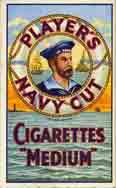
Front of a packet of Players Navy Cut cigarettes
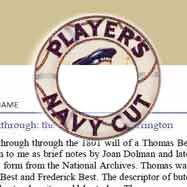
How to use the packet to make a bookmark that does not knock or slide off the page
The end of cigarette cards
Cigarette cards were common before the war, but were discontinued during the war to conserve resources. As I was born in the first year of the war, I never saw them in sales, although there were plenty of them around in peoples' private collections. After the war, they never really took off, although I understand that some cigarette brands produced a few to mark special events like the 1951 Festival of Britain.
Collecting give-away cards today
Today, supermarkets and stationers give out free cards which can be stuck in books. A particular favourite is on football. No doubt these cards, like cigarette cards, encourage parents to shop where their children can complete their sets.
Jill Gaisford
Stamp collecting
Another favourite for collecting was used postage stamps which would be stuck into a special book called a stamp album.
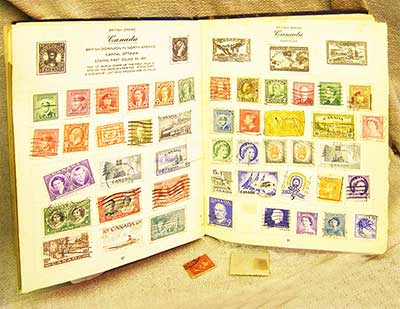
Stamp album
It was common practice for children to waylay anyone who received a letter or parcel, particularly if it was from overseas, to request the postage stamp. Fortunately for the children, there were lots of letters in those days, so lots of stamps.
The stamp was carefully torn round with its backing paper still attached and then soaked in water to dissolve the glue. The paper backing then just floated off the stamp. The stamp was allowed to dry and then stuck into the stamp album with a small, semi-transparent piece of paper coated with a mild gum which allowed the stamp to be removed later without damage. It was called a stamp hinge, was manufactured specially for the purpose and was readily available to buy.
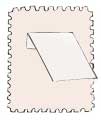
Stamp hinge stuck on the back of a stamp
Children were often very proud of their stamp albums and would spend hours looking at them with other children and swapping duplicates. Whenever family or friends received a letter from overseas, they were always instructed to keep the stamp for someone or other.
Collecting bible stamps
Not unlike cigarette cards, from a collector's point of view, were Sunday School stamps on biblical themes - see Sunday Schools.
Collecting marbles
There is a full page on marbles. Collecting and swopping them was common; boys played them outside with other boys as street games.
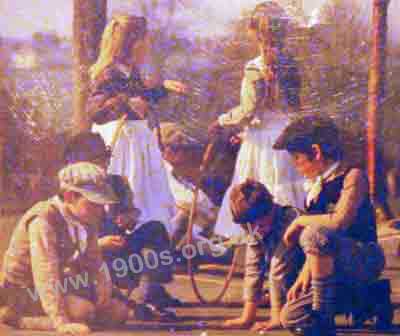
Detail from a picture on display at Blaise Castle House Museum in Bristol showing boys playing marbles
Collecting autographs
Collecting autographs from friends, relatives and celebrities was a common childhood hobby.
Note from the webmaster
I too remember collecting autographs from the late 1940s to the early 1950s. Shops sold small, nicely bound booklets of blank sheets of paper, like the one on the photo and we would get our friends to write a few words and sign them.
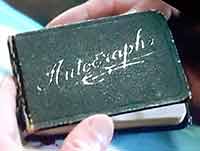
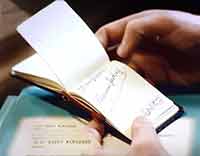
Autograph book, closed and open
Sometimes the signatures were just that with perhaps a 'love' or 'best wishes', but often the messages were something amusing. One I remember was:
YYUR
YYUB
ICURYY4me
If this seems like nonsense to you, just try reading it aloud pronouncing 'YY' as 'two Ys'.
Creative hobbies
There was really no limit to children's creativity on what to collect or do.
Unfortunately, I am sad to say, collecting birds' eggs was common until it was made illegal. It needed a degree of daring to climb trees to get to nests and to blow out what was inside the eggs, leaving only shells.
I once won a prize at school for a wild flower collection and my friend won one for a collection of drawings of the sea shells that she saw on a day trip to the seaside.
What is the message for children's hobbies today?
Note from the webmaster
What strikes me as I read this page, written by mother on her childhood in the early 1900s, is how much has changed. Children's hobbies then involved activity and some sort of creativity, rather than being tied to a computer screen.
Yet what are the alternatives for today's children? There are no cigarette cards to collect (but see Jill Gaisford's alternative above). Postage stamps have almost entirely been overtaken by franking and instant messaging; attending Sunday School for bible cards is no longer widespread and few children would want to play marbles scrabbling around the floor or pavement when computer games are on hand.
There are of course other forms of amusement that don't involve being ties to a computer screen, although they wouldn't really be classed as hobbies. See the list of games with links to their pages.
If you know any examples of what children of today might collect or what free hobbies they could have, please let me know. I am looking for ideas that involve creativity and activity, rather than being tied to a computer screen.
sources: early 20th century material
sources: ww2 home front and other material
contact
the webmaster/author/researcher/editor
privacy policy

