






 Christmas puddings
Christmas
Christmas puddings
Christmasspecialities Christmas
decorations WW1 Christmas cards Christmas
Eve Christmas
Day Boxing
Day


How to make a Christmas pudding the Victorian way
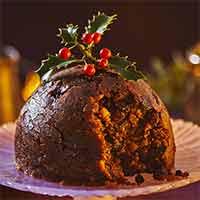
Making Christmas puddings was much harder work in the past than today. There was no ready-prepared dried fruit, nuts or peel in the shops, so all the ingredients had to be prepared from scratch. The puddings were large to feed the large families, making them heavy to mix and lift, and there were no electric mixers. Silver coins had to be saved and added. This page explains the process for your interest, although it does not assume that you would want to try yourself. You may, though, like to use some of the simpler traditions.
____
Extracted from the memoirs of the webmaster's mother(1906-2002) and edited by the webmaster with further research
My mother made our Christmas puddings as she remembered her own mother making them in Victorian times.
There were no ready-meals in the shops and no fridges when when I was a child in the early years of the 20th Century. Women had to make their own Christmas puddings, just like their parents and grandparents before them. A lot had to be done, and preparations began some weeks beforehand.
We were an ordinary family and had no servants. So brothers and I had to help my mother by preparing the ingredients.
The traditional ingredients and their preparation
Raisins - and the how they were stoned
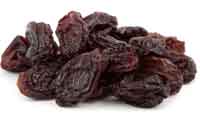
We had to stone the raisins ourselves as they didn't come ready-stoned in the shops. For this, we needed a basin of hot water. Then with a finger and thumb we would open a raisin onto a large plate, pick out the stone and rinse it off in the hot water. Then we would go on to the next raisin.
Almonds - and how they were shelled and skinned
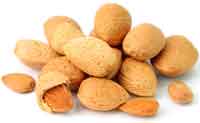
We had to shell the almonds using nutcrackers.
Then we had to take the skins off which was called blanching them. It involved putting the almonds into a bowl and pouring on boiling water. After a few minutes, the skin would just slide off between our fingers.
If the water was too hot, we burnt our fingers, but if we let it cool too much, the skins wouldn't slide off.
Candied fruit and peel - and how it was prepared
We also had to slice the candied fruit and candied peel, as they were not ready-sliced in the shops.
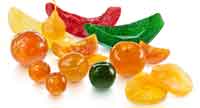
The candied fruit and peel came was sold as halves of candied oranges, lemons and grapefruit. They had thick coatings of sugar on the outside and lumps of sugar in the centres that we loved to eat as we sliced them.
Alcohol - the type used
I never heard of anyone putting brandy into Christmas puddings, which seems to be the thing to do these days. Perhaps it was too expensive. The puddings were mixed with porter which was a kind of beer.
Silver threepenny bits - real silver

A few silver threepenny pieces were added with the dried fruit. As these were made of silver, they supposedly didn't taint the pudding, but they could jar your teeth badly on them if you weren't careful.
Today, there are no truly silver coins, only look-alike alloy ones. I understand that some people wrap these in greaseproof paper to put into the pudding. Of course the prolonged cooking would kill any bugs, but I can't believe that the metalic taint would disappear.
How the Christmas puddings were made
When my mother had mixed all the ingredients for the Christmas pudding together, everyone in the family had a stir for luck. This was a convention followed by all the families I knew.
My mother would then let the mixed ingredients stand overnight to blend the flavours.
Then next morning she put the mixture into china basins, covered them and boiled them in a large pan for eight hours. She had to top up the pan with water from time to time to prevent it from boiling dry.
How Chrismas puddings were boiled - history books are not always right!
Although my mother specifically states that the Christmas puddings were boiled in china basins in a large pan, magazines and TV programmes invariably say that they were tied in cloth and boiled in the copper. I suspect that both practices may have been in use, as my mother has never yet been proved wrong in her recollections. However I certainly can't imagine her own mother wanting to contaminate her clothes wash with a copper that had had greasy cooking water in it. Coppers could not easily be washed out like today's sinks as only a very few had a drain.
Similarly the accepted wisdom seems to be that brandy was mixed into the pudding, although my mother specifically states that porter beer was used by all the people she knew. Perhaps this was a difference between life in the grand houses and the working classes. This website specialises in everyday life of the working classes.
Why several Christmas puddings
My mother always made three Christmas puddings because they would keep for months and they took so much effort to make. She said that this was also what her own mother used to do in Victorian times. One pudding was specifically for my father's birthday in July.
As she needed a very large mixing bowl, she used the basin from our decorated china jug and basin set. This was intended for hot water for guests who washed upstairs, but most people, including guests, washed downstairs in the scullery. My father used the jug for making his homemade wine.
If you can add anything to this page or provide a photo, I would be pleased if you would contact me.
Text and images are copyright
sources: early 20th century material
sources: ww2 home front and other material
contact
the webmaster/author/researcher/editor
privacy policy

